


Why Does A Centrifugal Fan Consume More Power Than Expected?
Sep 22, 2026
A centrifugal fan may consume more electricity than expected even when its motor, impeller, and housing appear to be operating normally. In some factories, the fan draws more power than the original selection data suggests. In others, electricity consumption increases after ductwork modifications, production expansion, or changes in operating conditions.
The reason is not always an inefficient motor. Actual power consumption depends on the fan's operating point, airflow resistance, rotational speed, impeller condition, transmission efficiency, and the way the fan is connected to the ventilation system.
Simply installing a larger motor or reducing airflow with a damper does not necessarily solve the problem. It may increase operating costs without correcting the underlying cause.
For industrial users, the first step is to identify whether the additional power demand comes from the fan itself, the drive system, or the connected ductwork.
1. The Fan Is Operating at a Higher Airflow or Pressure Requirement
One common reason for higher-than-expected power consumption is that the fan is delivering more air or working against a higher pressure requirement than originally planned.
A centrifugal fan is selected according to a required airflow and pressure. If the actual system requires a different operating point, the fan may consume more power than the initial estimate.
This can happen when:
Production equipment requires more exhaust air than originally specified.
Additional extraction points are connected to the duct network.
The ventilation system operates for longer periods at full capacity.
Process conditions change and require higher air volume or pressure.
The fan is operated at a higher speed to compensate for insufficient airflow.
Before adjusting the equipment, compare the original fan selection data with actual operating measurements. Check airflow, static pressure, rotational speed, and motor input power under the same operating conditions.
If the process requires more airflow than the original design, the higher power consumption may be a result of increased demand rather than a mechanical fault.
2. The Fan Runs at a Higher Speed Than Necessary
Fan speed has a particularly strong influence on power consumption.
When a centrifugal fan runs faster, it generally delivers more airflow and develops higher pressure. However, the increase in power is much greater than the percentage increase in speed.
Under comparable conditions, fan power approximately follows the cube of rotational speed. A 10% increase in fan speed can result in approximately 33% higher fan power demand.
This is why increasing the VFD frequency or changing pulley sizes to solve an airflow problem should not be treated as a simple adjustment.
For example, a fan that originally operated at its selected speed may consume significantly more electricity after its speed is increased to compensate for poorly designed ductwork or additional system resistance.
What to check:
Compare actual fan RPM with the original selection.
Check VFD frequency and operating records.
Inspect whether pulley sizes have been changed.
Confirm whether the fan has been deliberately overspeeding.
Check that the motor and rotating assembly are suitable for the operating speed.
If the fan is oversized for normal operating demand, reducing speed through a properly selected variable-frequency drive may provide energy savings. However, the revised operating point must still meet the required airflow and pressure conditions.
3. Poor Inlet or Outlet Duct Design Creates System Effect
The connection between a centrifugal fan and its ductwork can have a major influence on energy consumption.
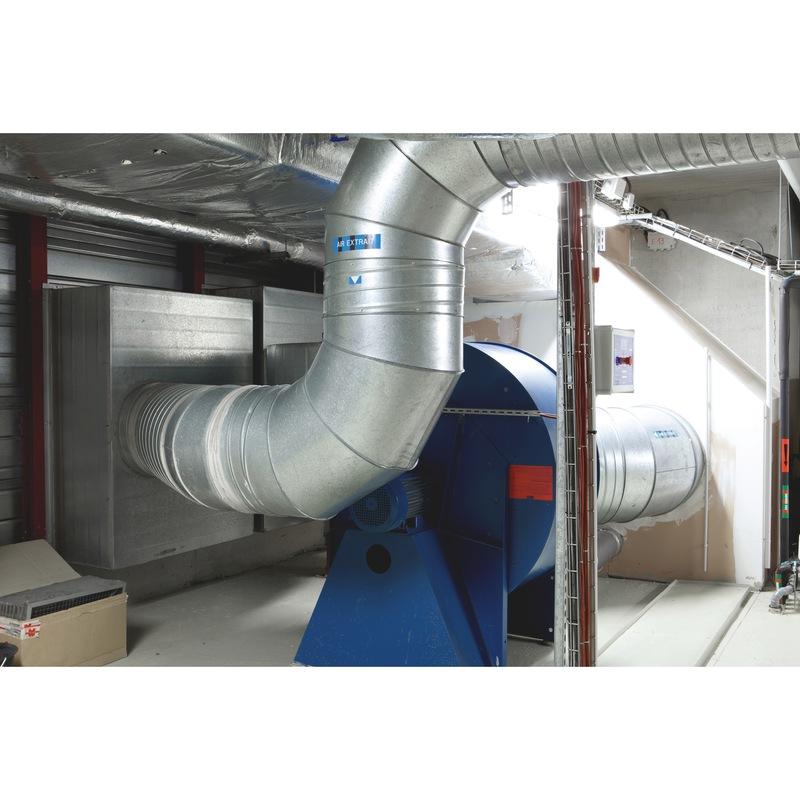
A fan performs under specific inlet and outlet conditions during testing. In an actual factory installation, nearby elbows, abrupt transitions, obstructions, and poorly arranged ducts can disturb the airflow entering or leaving the fan.
This is known as system effect.
For example, an elbow installed too close to the fan inlet may cause uneven airflow or swirl. The impeller then receives air under conditions different from those assumed during fan selection.
Certain adverse inlet-flow conditions can increase the power required to achieve the desired operating performance. Operators may respond by increasing fan speed, which raises electricity consumption further.
Other installation problems include:
An inlet duct that is too close to a wall or structural obstruction.
Abrupt changes in duct size near the fan.
Poorly designed inlet boxes or transitions.
Insufficient straight duct length at the fan outlet.
Unfavorable outlet connections that prevent proper pressure recovery.
The important point is that increasing motor power does not correct poor airflow conditions. Inspect the duct layout around the fan before deciding that the fan needs a larger motor.
4. Filters and Ductwork Have Developed Excessive Resistance
Dust accumulation inside filters, ducts, heat exchangers, and other system components changes the resistance of the ventilation system.
In a dust collection application, for example, a filter that has accumulated a large amount of material may develop a higher differential pressure. Duct deposits and partially closed dampers can also change the system operating point.
However, it is important not to assume that every blockage automatically increases centrifugal fan power.
Depending on the fan's performance curve and drive arrangement, increased system resistance may reduce airflow and can either increase or decrease the fan's power demand. The actual result must be checked against measured airflow, pressure, and electrical input.
What to check:
Measure filter differential pressure.
Inspect duct sections for accumulated material.
Check whether dampers are fully open or operating at their intended positions.
Compare actual airflow with the required process airflow.
Review fan pressure and power measurements together.
If the filter is heavily loaded, cleaning or replacing it may restore the intended operating condition. If the system has been modified, its resistance should be reassessed rather than simply increasing fan speed.
5. Impeller Fouling, Wear, or Damage Changes Fan Efficiency
The impeller is responsible for transferring energy to the air. Its condition directly affects fan performance.
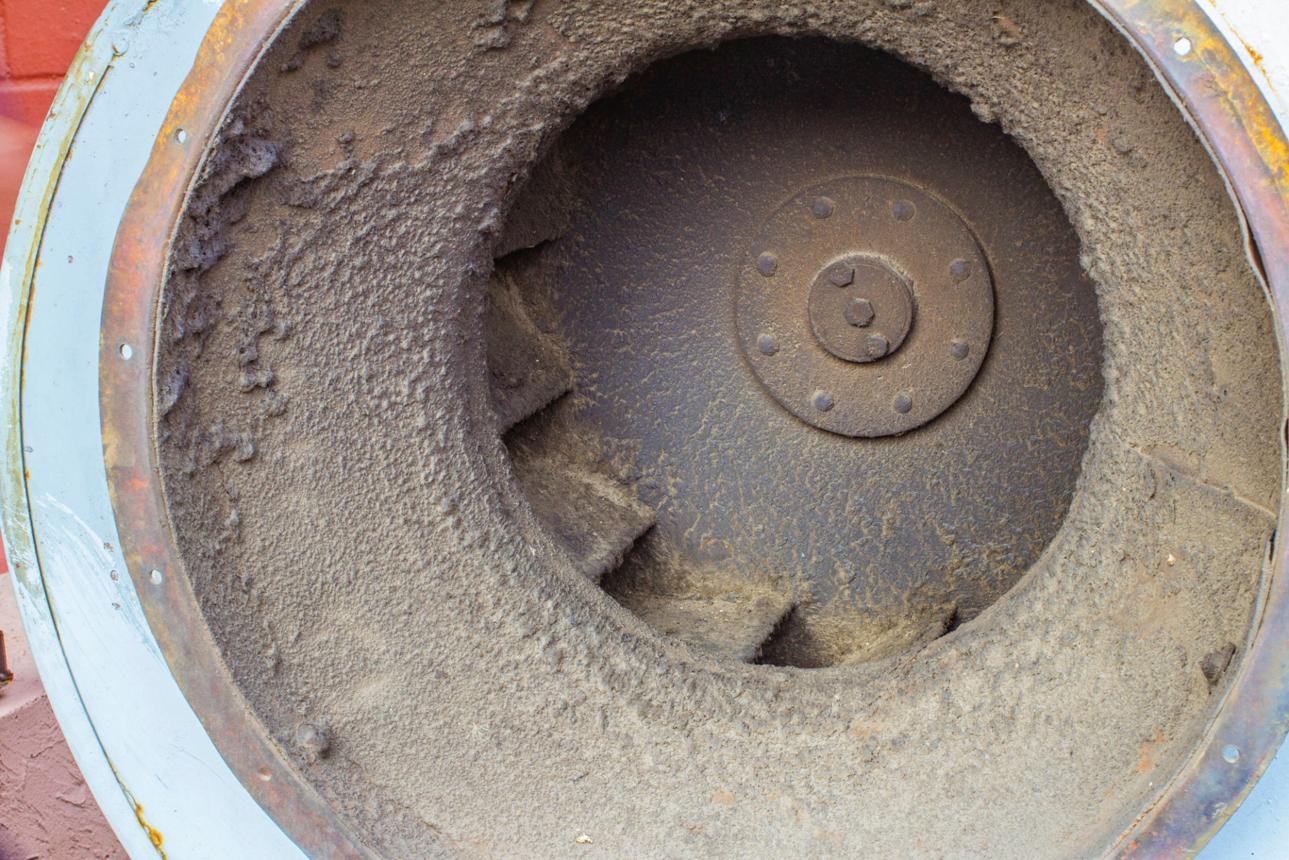
In industrial environments, dust, fibers, oil mist, and other process residues can accumulate on the blades. Abrasive particles may also wear the blade surfaces, while corrosive gases can damage the impeller material.
These conditions can alter the airflow pattern and reduce aerodynamic efficiency. Uneven deposits may also create rotor imbalance, increasing vibration and mechanical losses.
The effect on electrical power is not always the same. Depending on the impeller design, deposit distribution, and operating point, fouling or damage may increase or decrease measured power while reducing useful airflow.
This is why power consumption should not be evaluated separately from airflow and pressure.
During inspection, check for:
Uneven material deposits on the impeller.
Blade erosion or corrosion.
Bent or damaged blades.
Loose impeller connections.
Abnormal vibration after cleaning or repair.
If the impeller has lost its original geometry or structural condition, cleaning alone may not restore the fan's performance.
6. The Motor or Transmission Is Operating Inefficiently
A centrifugal fan's electricity consumption includes losses from the motor and, where applicable, the belt or other transmission components.
A motor operating under unsuitable loading conditions may have lower efficiency than expected. Incorrect motor selection, poor electrical supply conditions, or a damaged motor can also affect overall energy use.
For belt-driven fans, slipping belts and worn pulleys waste power through transmission losses. Excessive belt tension can increase bearing loads, while poor alignment can create additional mechanical stress.
Direct-drive fans avoid belt transmission losses, but they still require appropriate motor selection and correct operating conditions.
When investigating this problem, do not rely only on motor current. Current is useful for identifying changes in loading, but it does not directly represent real electrical power because voltage, power factor, and motor efficiency also matter.
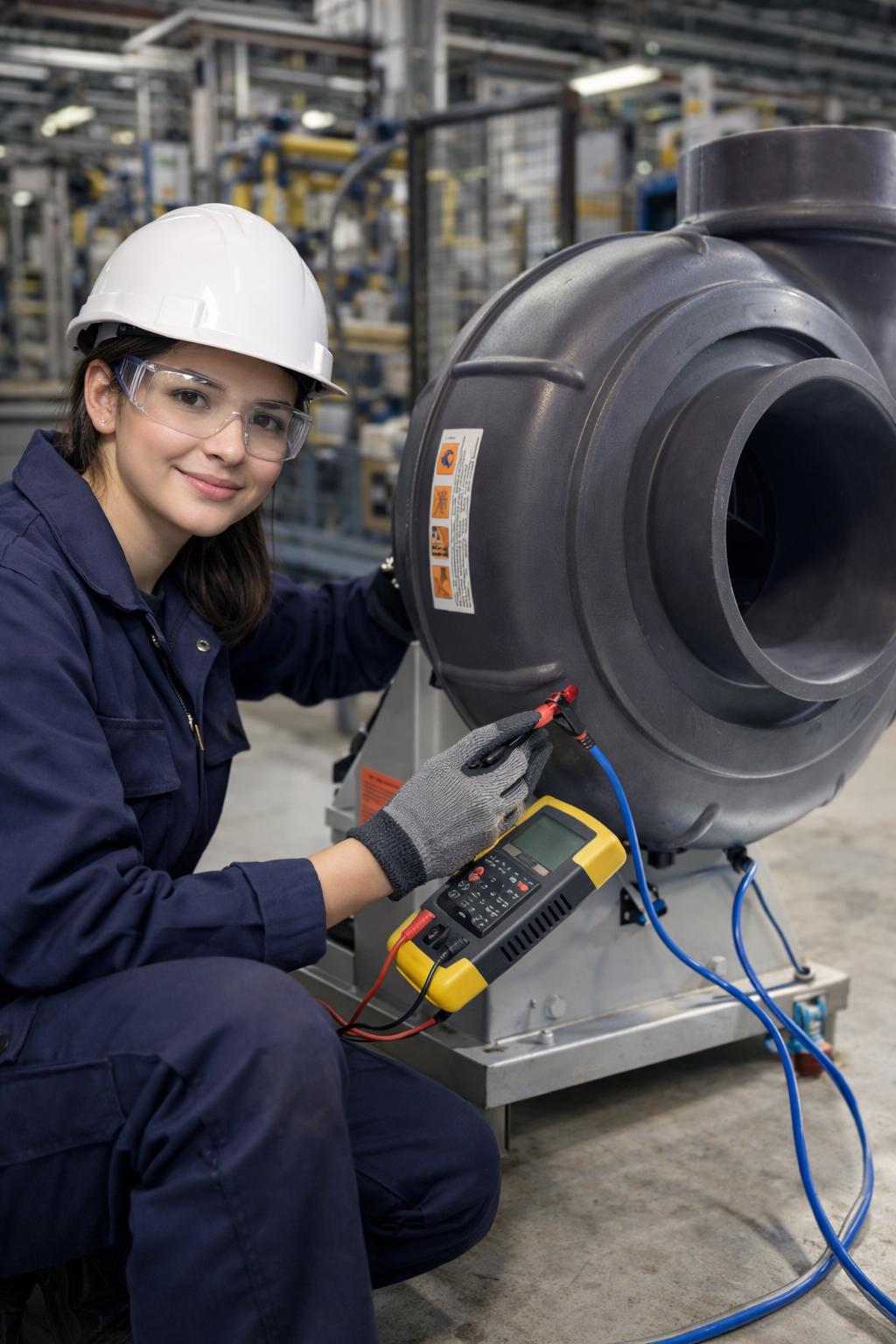
A power analyzer or suitable electrical measurement equipment can provide a more accurate assessment of actual input power.
7. The Fan Is Oversized and Controlled by Throttling
Oversized centrifugal fans are sometimes installed because the system designer wants additional capacity for future expansion or because the actual system resistance was not accurately calculated.
The fan may then deliver more air than the process requires. Operators often control the excess airflow by partially closing an outlet damper.
Although throttling can reduce airflow, it introduces additional resistance into the system. The fan continues operating at a less favorable point, and energy is spent generating pressure that is subsequently lost across the damper.
For systems with widely varying airflow requirements, a properly selected variable-frequency drive may offer better control.
However, a VFD is not automatically the best solution for every fan. The fan curve, motor characteristics, minimum operating speed, and process requirements must all be considered.
If the fan is significantly oversized, a better long-term solution may be to reassess the fan selection and operating strategy.
8. How to Find the Actual Cause of High Power Consumption
When a centrifugal fan consumes more power than expected, changing components immediately can lead to unnecessary costs.
A more reliable approach is to collect operating data and compare it with the original design conditions.
| What to Measure | What It Helps Identify |
|---|---|
| Real electrical input power (kW) | Actual electricity demand |
| Motor current and voltage | Electrical loading and supply conditions |
| Fan rotational speed | Overspeeding or drive changes |
| Airflow | Whether the fan delivers the required volume |
| Inlet and outlet pressure | Actual operating point and system resistance |
| Filter differential pressure | Filter loading and airflow restriction |
| Vibration | Impeller imbalance and mechanical problems |
| Motor and bearing temperature | Overloading, friction, or cooling problems |
A useful troubleshooting sequence is:
Confirm that the power measurement is accurate and compare it with the original operating record.
Record fan speed, airflow, and pressure under the same operating conditions.
Inspect the inlet and outlet connections for poor duct arrangements or obstructions.
Check filters, dampers, and ductwork for changes in system resistance.
Inspect the impeller, bearings, belts, and motor.
Compare the measured operating point with the manufacturer's fan performance curve.
This process helps distinguish between increased process demand, installation-related losses, mechanical deterioration, and inefficient fan selection.
How Can You Reduce Centrifugal Fan Power Consumption?
Reducing electricity consumption starts with correcting the actual source of energy waste.
For an existing installation, the most useful improvements may include cleaning loaded filters, correcting duct connections, restoring proper belt alignment, removing unnecessary airflow restrictions, or adjusting fan speed to match the real process demand.
For a new installation or replacement project, accurate fan selection is especially important. Buyers should provide the required airflow, static or total pressure, gas temperature, air density where relevant, transported material, and expected operating hours.
A fan selected only by nominal airflow or motor power may not operate efficiently once connected to the actual duct system.
The objective is not simply to choose a smaller motor or reduce electricity consumption at any cost. The fan must still provide the airflow and pressure required for safe and stable production.
Conclusion
A centrifugal fan can consume more power than expected because it operates at a higher speed, handles greater airflow or pressure demand, experiences unfavorable system effects, or operates with reduced mechanical and aerodynamic efficiency.
The most important step is to compare electrical input power with actual airflow, pressure, and rotational speed. Without these measurements, it is difficult to distinguish an oversized fan from a system resistance problem or a mechanical fault.
At Wuxi JN Fan Factory, centrifugal fan selection should consider the complete operating system rather than motor power alone. Matching the fan performance curve to the actual application helps avoid unnecessary energy consumption while maintaining the airflow and pressure required by industrial processes.
You Might Also Like
-

T40 China Industrial Low Pressure Axial Air Blower Fan Fa...
-

Axial Roof Top Ventilator Exhaust Blower Fan Prices Smoke...
-

Industrial Roof Ventilation Electric Roof Fan
-

5-30 Explosion Proof Ventilation Blower Fan Manufacturer ...
-

China Explosion Proof Ventilation Centrifugal Air Blower ...
-

380V 415V 440V Low Noise Marine Centrifugal Ventilation B...