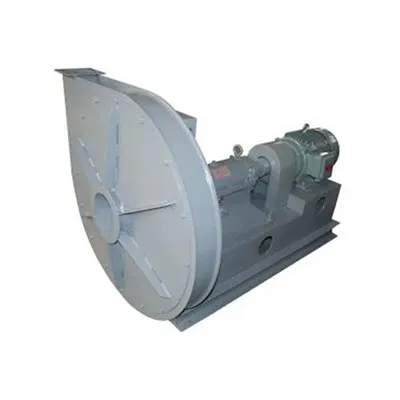
Why Does an Industrial Fan Lose Performance Over Time?
Sep 08, 2026
An industrial fan may operate normally when first installed but gradually deliver less airflow, produce more noise, or consume more energy after months or years of operation. In many factories, this change is not caused by one major failure. Instead, several small problems develop during continuous operation and gradually affect the fan and the connected ventilation system.
Dust accumulation, impeller wear, belt deterioration, bearing problems, corrosion, and increasing duct resistance are among the most common reasons. If these issues are not identified early, the fan may need to run longer or work harder to maintain the same production conditions.
Understanding why industrial fan performance declines over time helps maintenance teams identify the actual source of the problem before it leads to unplanned downtime or unnecessary equipment replacement.
1. Dust and Material Build-Up on the Impeller
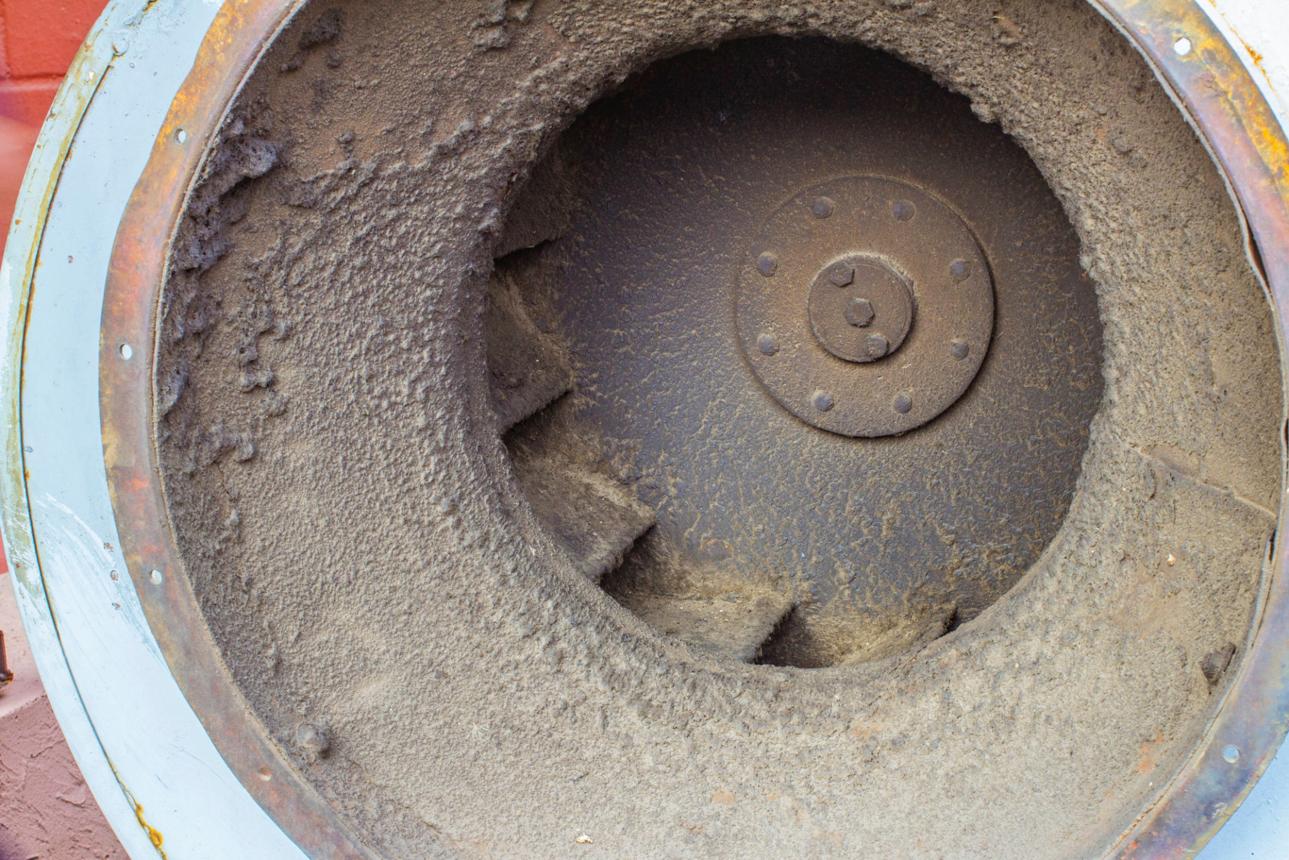
Dust accumulation is one of the most common causes of gradual performance deterioration, particularly in cement plants, woodworking facilities, metal processing workshops, and other industrial environments handling airborne particles.
During operation, dust, fibers, oil mist, and process residues can collect on the impeller blades and inside the fan housing. The deposits change the original blade surface and airflow passage. If the build-up is uneven, it can also create rotor imbalance.
The problem is not always obvious from outside the fan. A unit may continue running while airflow gradually decreases and vibration becomes more noticeable.
What maintenance teams should check:
Inspect both sides of the impeller blades, including areas that are difficult to see.
Look for uneven deposits, hardened material, and blocked airflow passages.
Compare vibration readings with previous maintenance records.
Check whether the material being transported has become stickier, wetter, or more abrasive.
Cleaning should follow the fan manufacturer's maintenance instructions. If deposits have caused significant imbalance or damaged the blade surfaces, cleaning alone may not restore the original operating condition.
2. Impeller Wear and Corrosion
Industrial fans operating in abrasive or corrosive environments are exposed to continuous mechanical and chemical stress.
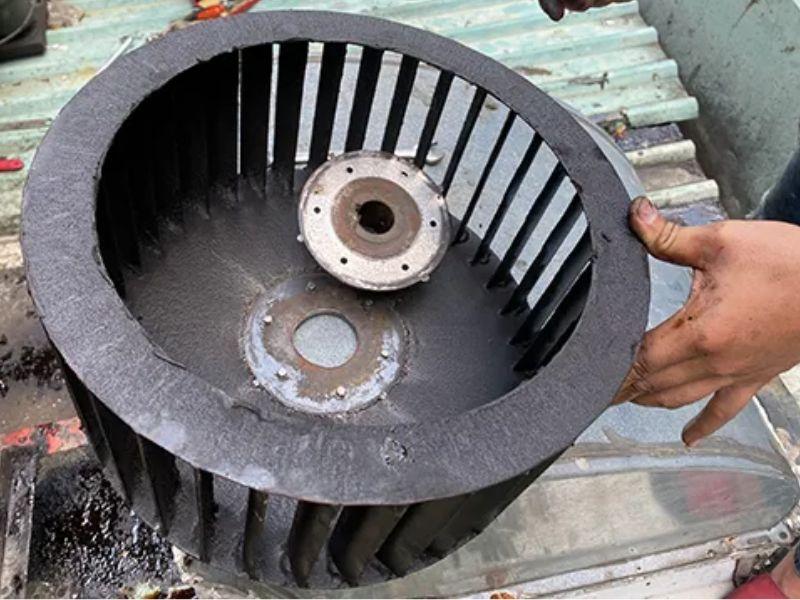
Dust particles carried at high velocity can gradually erode blade surfaces. Chemical fumes, moisture, and corrosive gases may also attack the impeller and fan housing. Over time, corrosion can reduce material thickness, while erosion can change the blade profile.
These changes affect how efficiently the impeller transfers energy to the air. In severe cases, blade deformation or material loss can also create imbalance and increase vibration.
The inspection method should reflect the operating environment. For example, a fan handling abrasive dust needs particular attention to blade edges and wear areas. A fan exhausting humid or corrosive gases requires regular checks for rust, pitting, and material deterioration.
Do not treat every worn impeller as a cleaning problem. If the blade geometry or structural integrity has been compromised, repair or replacement may be necessary.
3. Belt Stretching, Slippage, and Drive Wear
For belt-driven industrial fans, the drive system is another important source of gradual performance loss.
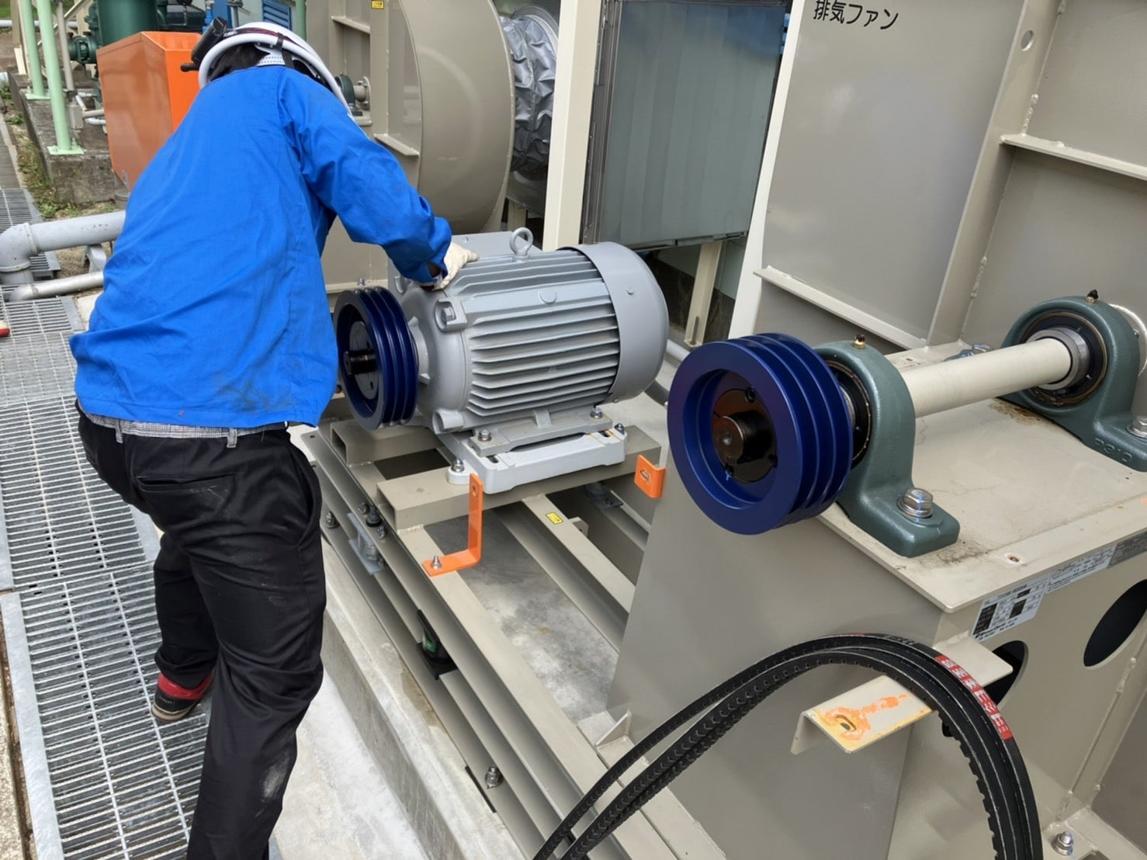
V-belts can stretch, harden, crack, or lose their original grip after extended operation. When a belt slips, the fan may run below its intended speed even though the motor is operating normally.
This can result in reduced airflow and insufficient pressure for the connected ventilation system. Pulley wear and misalignment can make the problem worse.
A common mistake is to tighten a loose belt without checking the condition of the entire drive system. Excessive belt tension increases the load on bearings and may accelerate mechanical wear.
During maintenance, inspect:
Belt cracks, glazing, uneven wear, and contamination.
Pulley alignment and visible groove wear.
Belt tension according to the manufacturer's instructions.
Fan speed compared with the original operating record.
For multiple-belt drives, belts should generally be replaced as a matched set rather than replacing only the most visibly worn belt.
4. Bearing Wear and Poor Lubrication
Fan bearings support the rotating shaft and allow the impeller to operate smoothly. As operating hours accumulate, bearing surfaces can deteriorate, particularly when lubrication is insufficient, excessive, contaminated, or unsuitable for the operating conditions.
Bearing wear may initially appear as a slight increase in noise or vibration. As the condition worsens, friction and operating temperature may increase. Excessive shaft movement can also affect the alignment between the impeller and other fan components.
Lubrication should not be treated as a simple rule of adding more grease. Over-lubrication can also cause overheating and bearing damage.
A practical maintenance approach includes recording bearing temperature, listening for changes in operating noise, checking vibration trends, and following the specified lubrication interval and lubricant type.
If a bearing repeatedly overheats or fails, investigate the underlying cause. Misalignment, excessive belt tension, contamination, and abnormal operating loads may be contributing to the problem.
5. Increasing Resistance in the Duct System
Not every gradual reduction in airflow comes from the fan itself.
As an industrial ventilation system operates, dust can accumulate inside ducts, filters can become blocked, dampers can move away from their intended positions, and other components may develop additional resistance.
The fan then has to operate against a different system condition. Even if the impeller and motor remain in good mechanical condition, the airflow delivered to the process can decrease.
This is particularly important in dust collection systems and industrial exhaust applications, where filters and duct cleanliness directly affect system resistance.
When investigating declining airflow, maintenance teams should compare filter differential pressure, fan inlet and outlet static pressure, and airflow measurements with previous records.
If the fan's operating condition has changed but its mechanical condition remains normal, the duct and filtration system should be investigated before considering fan replacement.
6. Changes in Operating Conditions
A fan that performed well during its first year may not be operating under the same conditions several years later.
Production capacity may increase, additional extraction points may be connected, ductwork may be extended, or process equipment may be modified. These changes can increase the air volume or pressure requirements of the system.
For example, adding new branches to an exhaust duct network may change airflow distribution. A fan originally selected for one production line may no longer meet the requirements after the line is expanded.
This is not necessarily a sign that the fan has physically deteriorated. It may indicate that the original operating duty no longer matches the current process.
Before changing the fan, review the original design conditions against the actual operating requirements. Check airflow demand, system resistance, damper settings, and the current operating point on the fan performance curve.
7. Poor Maintenance Allows Small Problems to Accumulate
Many industrial fan problems develop gradually because individual warning signs are not recorded or investigated.
A small amount of dust build-up may initially have little visible effect. A slightly loose belt may continue transmitting power. Minor bearing noise may be ignored because the fan is still running.
However, these conditions can develop together. Dust accumulation may create imbalance, vibration may accelerate bearing wear, and belt deterioration may reduce fan speed.
A maintenance schedule should therefore focus on changes in operating condition rather than simply checking whether the fan can still start and run.
A practical inspection record should include:
| Inspection Item | What to Record |
|---|---|
| Airflow | Measured airflow or process extraction performance |
| Static pressure | Fan inlet and outlet pressure |
| Impeller | Dust build-up, erosion, corrosion, and damage |
| Vibration | Readings at consistent measurement locations |
| Bearings | Temperature, noise, and lubrication condition |
| Belt drive | Tension, alignment, and wear |
| Motor | Current, temperature, and operating condition |
| Filters and ducts | Differential pressure, blockage, and leakage |
Comparing these records over time is more useful than relying on a single inspection. A gradual change in vibration, pressure, or airflow may reveal deterioration before the fan experiences a serious failure.
8. How Can You Prevent Industrial Fan Performance from Declining?
Preventive maintenance should reflect the actual working environment and the type of material handled by the fan.
For a dust-handling application, impeller cleaning and wear inspection may need more attention. In a humid or corrosive environment, corrosion checks and material condition become more important. For a belt-driven fan, drive alignment and belt condition should be included in routine inspections.
A useful maintenance approach includes:
Establish baseline airflow, pressure, vibration, motor current, and fan speed after installation or commissioning.
Set inspection intervals based on operating hours and the severity of the working environment.
Clean the impeller and air passages before deposits become difficult to remove.
Check belts, bearings, couplings, and fasteners during scheduled maintenance.
Investigate repeated vibration, overheating, or airflow reduction instead of treating each symptom separately.
Review the fan's operating duty whenever production equipment or ductwork is modified.
Maintenance work should always follow proper lockout and isolation procedures. Internal inspection and cleaning must only be carried out after the fan has been safely stopped and isolated.
When Should You Repair or Replace an Industrial Fan?
A gradual decline in performance does not automatically mean that the entire fan needs to be replaced.
If the main problem is a blocked filter, dirty impeller, loose belt, or incorrect damper position, restoring the original operating condition may be relatively straightforward.
However, replacement or major repair should be considered when the impeller has serious structural damage, corrosion has weakened critical components, bearing or shaft damage is extensive, or the fan can no longer meet the required operating duty.
The decision should be based on the fan's mechanical condition, actual airflow and pressure requirements, repair costs, and expected operating reliability.
For industrial buyers, this is also an important point when selecting a replacement fan. The new unit should be matched to the current system resistance and process requirements, not simply selected by comparing motor power or nominal airflow.
Conclusion
Industrial fan performance usually declines through a combination of mechanical wear, contamination, corrosion, and changes in system resistance. The most effective way to prevent serious performance loss is to identify these changes early and track them through regular operating measurements.
At Wuxi JN Fan Factory, we understand that industrial fan selection must consider more than the initial airflow requirement. The working environment, transported material, operating hours, and maintenance conditions all influence long-term performance. Matching the fan to the actual application is an important step toward stable operation and lower maintenance costs.