


What Is a Belt Driven Centrifugal Fan? Working Principle, Advantages and Applications
May 01, 2026
In industrial ventilation projects, I've seen belt driven centrifugal fans used in both very successful systems and in systems that gradually developed problems over time-and the difference usually had nothing to do with the fan itself.
I remember a textile workshop where the maintenance team insisted the ventilation system was "losing power." The fan was running, but airflow at the terminals had clearly dropped. On inspection, the issue wasn't airflow design or fan sizing. It was the belt system that had gradually slipped out of optimal condition.
That's the reality of belt driven systems: they add flexibility, but they also introduce another layer of mechanical behavior that must be understood.
What Is a Belt Driven Centrifugal Fan?
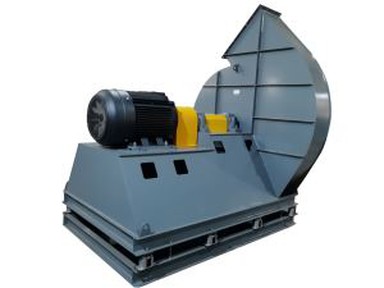
A belt driven centrifugal fan is a type of fan where the motor does not directly connect to the impeller. Instead, power is transmitted through a belt and pulley system.
This configuration allows the fan speed to be adjusted by changing pulley ratios, which makes it easier to fine-tune airflow performance without replacing the motor or fan wheel.
In industrial environments, this flexibility is one of the main reasons belt driven systems are still widely used, especially in HVAC and process ventilation applications.
How a Belt Driven Centrifugal Fan Works in Practice
The working principle is similar to other centrifugal fans: air enters the impeller center, is accelerated outward by centrifugal force, and is discharged at high pressure through the casing.
The key difference is how the impeller is driven.
Instead of a direct shaft connection, the motor rotates a pulley connected to a belt, which then drives the fan shaft at a controlled speed. By adjusting pulley size or belt configuration, the operating speed of the fan can be changed.
In theory, this sounds simple. In real industrial environments, belt tension, alignment, and wear all become important factors that directly affect performance stability.
Advantages of Belt Driven Centrifugal Fans
From field experience, one of the biggest advantages of belt driven centrifugal fans is flexibility.
They allow engineers to adjust airflow without changing the motor or replacing the entire fan assembly. In retrofit projects, this can be extremely useful when system conditions change over time.
I've worked on HVAC systems where building usage changed after installation, and airflow requirements increased. Instead of replacing equipment, we were able to adjust pulley ratios to match new conditions.
Another advantage is motor isolation. Because the motor is not directly connected to the impeller, it is less exposed to vibration and harsh airflow conditions. This can improve motor lifespan in demanding environments.
Limitations You Only See in Real Operation
At the same time, belt driven systems introduce mechanical components that require maintenance.
Over time, belts can loosen, wear, or lose efficiency. Misalignment can lead to vibration, noise, or gradual performance loss.
I once inspected a ventilation system where operators believed the fan motor was failing. In reality, the belt had gradually stretched over months of operation, reducing impeller speed and overall airflow.
After replacing and properly tensioning the belt system, the fan performance returned to normal without any motor replacement.
This is a common situation in long-running industrial systems.
Where Belt Driven Centrifugal Fans Are Commonly Used
In real industrial applications, belt driven centrifugal fans are often used in HVAC air handling units where airflow needs to be adjustable and system conditions may change over time.
They are also common in industrial ventilation systems where duct resistance varies or where retrofit flexibility is important.
In some manufacturing environments, they are used when motor isolation is beneficial due to heat, vibration, or air contamination concerns.
The key pattern is flexibility-these systems are chosen when operating conditions are not completely fixed.
A Field Insight from Real Projects
One project that clearly demonstrates their value involved a facility expansion where production load increased significantly after the original ventilation system was installed.
Instead of redesigning the entire system, we adjusted the belt driven centrifugal fan speed by modifying pulley configuration.
The result was a noticeable improvement in airflow distribution without replacing major equipment.
That kind of adaptability is one of the main reasons belt driven systems remain relevant in industrial ventilation.
When You Should Choose a Belt Driven Centrifugal Fan
From practical engineering experience, belt driven centrifugal fans are a good choice when:
Airflow requirements may change over time, system retrofit flexibility is needed, motor isolation is beneficial, or fine-tuning of fan performance is required without replacing major components.
They are especially useful in HVAC systems and industrial ventilation setups where conditions are not static.
A belt driven centrifugal fan is not fundamentally different in airflow principle from other centrifugal fans. The key difference lies in how power is transmitted and how easily operating speed can be adjusted.
This flexibility is both its biggest advantage and its main maintenance consideration.
In real industrial applications, the best results come from understanding not only how the fan performs at installation, but how the belt system will behave over time under continuous operation.
At Wuxi JN Fan Factory, this system-level approach is used to ensure belt driven centrifugal fan solutions remain stable, adjustable, and reliable throughout their operational lifecycle.
You Might Also Like
-

Low Noise Industrial Centrifugal Fan
-

Y8-39 Y9-38 Heavy Duty Heat Powered Stove Furnace 22kw 30...
-

DF Muti-blade Low Noise Small Centrifugal Fan Air Blower ...
-

HL Centrifugal Blower for Printing Machinery
-
Incinerator Coupling Driven Industry Centrifugal Blowers ...
-

Hot-blast Furnace Stove Used Heat Resisting Centrifugal B...