


Belt Driven vs Direct Driven Centrifugal Fan: Which Is Better for Industrial Applications?
May 03, 2026
"Toss the direct drive quote," I told the plant engineer, sliding the spec sheet across the table. "You're exhausting 150°C (300°F) air from the curing oven. If we put a direct drive fan on this, the motor sits right in the airstream. You'll be rewinding it every three months."
He looked annoyed, probably thinking I was just trying to sell him a more expensive belt-drive setup. But after 15 years of engineering industrial airflow at Wuxi JN Fan Factory, I've learned that saving 10% on the initial fan purchase means absolutely nothing if you destroy the motor in a single quarter.
The debate between belt driven and direct driven centrifugal fans isn't about which one is universally "better." It's about matching the drive type to your specific air temperature, maintenance capabilities, and future process plans. Here is the field reality of how to make the right call.
The Core Difference: Simplicity vs. Flexibility
Before we get into the applications, let's look at the physical reality of the two designs.
Direct Driven: The fan impeller is mounted directly onto the motor shaft. When the motor spins at 1450 RPM, the impeller spins at exactly 1450 RPM. It's compact, highly efficient (no belt friction), and has fewer moving parts.
Belt Driven: The motor connects to the fan shaft via a system of pulleys and V-belts. By changing the size of the pulleys, you can change the fan speed independently of the motor speed.
When to Choose a Belt Driven Fan
In heavy industrial environments, the belt drive is usually the undisputed king. Here is why we specify it for 80% of our industrial projects at Wuxi JN:
1. High-Temperature Environments
This goes back to the oven story. In a direct drive fan, the motor is physically inside the airstream. If you are moving 150°C air, that motor is cooking. In a belt drive, the motor sits outside the housing, completely isolated from the extreme heat. The fan shaft passes through the housing, but we use heavy-duty, heat-resistant pillow block bearings to keep the heat away from the drive components.
2. You Need to Tweak the Airflow Later
Industrial processes change. Today you need 10,000 CFM. Next year, you add a new production line and need 12,000 CFM.
If you have a direct drive fan, you are stuck at the motor's fixed speed. You'd have to buy an expensive VFD or replace the entire fan. With a belt drive, your maintenance guy just swaps the pulleys for a different ratio, changes the belt, and boom-you have your extra 2,000 CFM for the cost of a few machined metal parts.
3. Dirty or Corrosive Air Streams
If you are moving highly abrasive dust or corrosive fumes, you don't want the motor's cooling fan sucking in that same dirty air. A belt drive keeps the motor in clean, ambient plant air, significantly extending the life of the motor windings and bearings.
When to Choose a Direct Driven Fan
Direct drives aren't just for cheap setups; they are highly engineered solutions for specific, demanding environments. We specify direct drives when the following conditions are met:
1. Strict Space and Weight Constraints
Because there is no motor base, no belt guard, and no heavy bearing pedestals, a direct drive centrifugal fan (like a plenum fan or inline centrifugal fan) is incredibly compact. If you are stuffing an Air Handling Unit (AHU) into a tight mechanical room or a rooftop curb, the space savings of a direct drive are massive.
2. Clean Air and Zero Contamination Tolerance
Belts wear out. As they rub against the pulleys, they generate microscopic rubber dust. In a standard factory, nobody cares. But if you are ventilating a pharmaceutical cleanroom, a semiconductor fab, or a food processing facility, that rubber dust is a catastrophic contaminant. A direct drive eliminates belts entirely, keeping the air stream 100% pure.
3. Low Maintenance Budgets
Belts stretch. They need to be tensioned, aligned, and replaced. If your facility runs 24/7 and you don't have a dedicated mechanical maintenance team to check belt tension every month, a direct drive is the way to go. Install it, balance it, and forget about it.
The "Hidden Efficiency" Trap
Here is a technical secret that catches a lot of buyers off guard.
On paper, a direct drive is 100% mechanically efficient because there is no belt friction (which usually eats up 2-3% of the motor's power). So, buyers assume direct drives save energy.
But in the real world, energy savings come from running the fan at its exact optimal point on the performance curve. Because a direct drive is locked to a fixed motor speed, it often has to be throttled with dampers to match the system, which wastes energy. A belt drive allows us to set the fan speed to the exact RPM required for your system, meaning the motor runs at peak efficiency without throttling. In many industrial applications, the belt drive actually results in a lower energy bill.
Stop Guessing, Start Engineering
Choosing between belt and direct drive isn't about picking the one with the fewest parts. It's about looking at your air temperature, your maintenance schedule, and your future production plans.
If you put a direct drive in a 150°C oven exhaust, you'll burn out the motor. If you put a belt drive in a cleanroom, you'll contaminate the product.
At Wuxi JN Fan Factory, we don't just quote the drive type you ask for. We look at your process. Send us your air volume, static pressure, air temperature, and the type of media you are moving. Our engineering team will provide a free, honest recommendation on exactly which drive configuration will keep your plant running reliably for years.
Contact Wuxi JN Fan Factory today, and let's get your airflow engineered right the first time.
You Might Also Like
-

Centrifugal Fan Wheel Stainless Steel Blower Fan
-

C4-73 Industrial Dust Collector Exhaust Centrifugal Blowe...
-

HL Centrifugal Blower for Printing Machinery
-
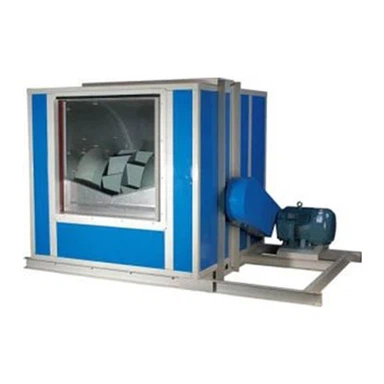
DCBF Backward Curved Impeller Counter Air Condition Centr...
-

AC Motor High Pressure Ventilation Centrifugal Fans Blower
-

Boiler Centrifugal Exhaust ID Fan Forced Draft Blower