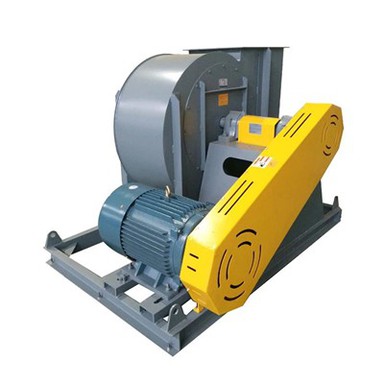
Types of Centrifugal Fans: Forward Curved, Backward Curved and Radial Fans Explained
Apr 17, 2026
"Stop! Don't just quote me the CFM and static pressure," I interrupted the project engineer on a video call last Tuesday. "What exactly is in the air stream? Is it clean, or is there wood dust?"
He paused. "There's some fine sawdust, but it's mostly air. Why does it matter?"
"Because if I quote you a forward curved fan for that, your maintenance team will be scraping dried resin off the impeller every three weeks."
After 15 years of engineering industrial airflow at Wuxi JN Fan Factory, I can tell you that 80% of premature fan failures happen because buyers only look at the performance numbers and ignore the blade profile. The shape of the impeller blades dictates not just how the fan performs, but what it can actually survive.
Here is the field reality behind the three main types of centrifugal fans, and how to match them to your specific air stream.
1. Forward Curved Fans: The "Volume" Kings (For Clean Air Only)
The Design: Dozens of shallow, forward-sweeping blades (often called a "squirrel cage").
The Reality: Because there are so many small blades grabbing the air at once, these fans move massive air volumes at very low rotational speeds. This makes them incredibly quiet and physically compact.
The Fatal Flaw: Those shallow blades act like tiny scoops. If the air contains dust, moisture, or sticky vapors, particles will lodge inside the curves. Within weeks, the uneven buildup destroys the rotor balance, causing violent vibration and bearing failure.
Where to use them: Strictly for clean air. Commercial HVAC systems, Air Handling Units (AHUs), and cleanroom ventilation.
2. Backward Curved Fans: The "Efficiency" Workhorses
The Design: Fewer, deeper blades that curve against the direction of rotation, shaped like airplane wings (airfoils).
The Reality: These are the heavy lifters of the industrial world. They generate high static pressure and are highly energy-efficient. More importantly, their smooth, open profile is inherently "self-cleaning." Dust and particulates simply slide off the back of the blades. They also feature a "non-overloading" power curve, meaning if the system resistance drops, the motor won't burn out from drawing too much current.
Where to use them: This is our most requested fan at Wuxi JN Fan Factory. Perfect for industrial exhaust, boiler induced draft, fume extraction, and systems with moderate dust or high static pressure requirements.
3. Radial Blade Fans: The "Heavy Duty" Brutes
The Design: Straight, simple blades radiating directly outward from the hub.
The Reality: They aren't the most energy-efficient, and they are loud. But they are virtually indestructible. The straight blades prevent heavy, abrasive, or sticky materials from building up, and the housing can be constructed with extremely thick steel or specialized wear-resistant coatings.
Where to use them: Severe material handling. Pneumatic conveying, sawmill wood chips, wet scrubbers, and heavy dust collection systems where other fans would be shredded in a month.
Stop Buying by Numbers, Start Engineering by Media
Choosing the right centrifugal fan isn't about picking the one with the highest CFM. It's about matching the blade physics to the physical reality of your air stream. Put a forward curved fan in a dusty woodshop, and you'll be replacing bearings every month. Put a radial blade fan in a clean HVAC office, and you'll waste thousands of dollars in unnecessary energy costs.
At Wuxi JN Fan Factory, we don't just take your CFM and static pressure and spit out a quote. We ask what's in the air.
Send your system requirements, including the type of media you are moving, to our engineering team. We will provide a free, precise fan selection report to ensure you get the exact blade profile that will keep your plant running smoothly for years.
Contact Wuxi JN Fan Factory today, and let's get your airflow engineered right the first time.
FAQ
Q: Which centrifugal fan is best for dusty or dirty air?
A: A backward curved or radial blade fan. Forward curved fans have shallow blades that easily trap dust, causing severe imbalance. Backward curved fans are self-cleaning and highly efficient, while radial fans are best for heavy, abrasive, or sticky materials.
Q: What is the advantage of a backward curved fan's "non-overloading" power curve?
A: It means the motor's power draw peaks at a specific point and then drops as airflow increases. If your duct system gets blocked or a damper is opened, the motor is physically protected from drawing excessive current and burning out, unlike forward curved fans.
Q: Why are forward curved fans so quiet?
A: Because their numerous shallow blades can move a massive volume of air at very low rotational speeds (RPM). Lower blade tip speed generates significantly less aerodynamic noise, making them ideal for noise-sensitive commercial HVAC applications.