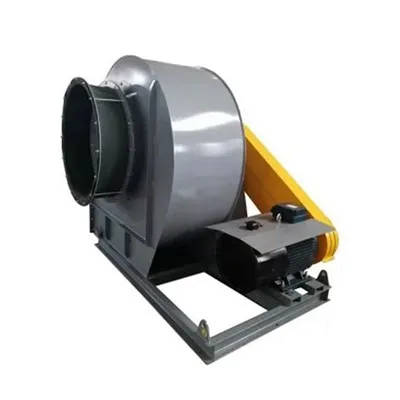
Where Are Blower Fan Centrifugal Systems Used? Applications in Cement, Steel, Chemical and Food Processing Industries
Jun 22, 2026
When customers first contact Wuxi JN Fan Factory, one of the questions we often hear is:
"Which industries actually use a blower fan centrifugal?"
The short answer is almost every industrial sector.
The more useful answer is that different industries require different types of centrifugal blowers. A fan that performs well in a food processing plant may not survive in a cement factory, while a blower designed for chemical exhaust may be completely unsuitable for pneumatic conveying.
Over the years, we've found that successful projects don't begin by choosing a fan model-they begin by understanding the operating environment. Dust concentration, air temperature, corrosion, pressure requirements, and operating hours all influence the final selection.
In this article, we'll explain where blower fan centrifugal systems are most commonly used and what engineers should consider in each industry.
Why Are Centrifugal Blowers Used in Industrial Plants?
Compared with standard axial fans, industrial centrifugal blowers generate much higher static pressure while maintaining stable airflow.
This makes them particularly suitable for systems involving:
- Long ductwork
- Dust collectors
- Cyclones
- Heat exchangers
- Filters
- Pneumatic conveying pipelines
- Industrial process equipment
Whenever airflow has to overcome resistance, a centrifugal blower fan is usually the preferred solution.
Let's look at some of the industries where they are used every day.
Cement Industry
The cement industry is one of the harshest environments for industrial fans.
Large amounts of abrasive dust, continuous operation, and high-temperature processes place significant demands on blower reliability.
Typical applications include:
- Kiln combustion air
- Dust collection systems
- Clinker cooling
- Raw material conveying
- Baghouse ventilation
- Air pollution control equipment
One issue we've encountered during technical discussions is that some customers focus only on airflow requirements while overlooking the abrasive nature of cement dust.
In these situations, selecting the correct radial blade centrifugal blower and wear-resistant materials often has a greater impact on service life than increasing motor power.
Steel Industry
Steel plants require reliable air movement throughout multiple production processes.
Applications commonly include:
- Blast furnace combustion
- Furnace ventilation
- Dust extraction
- Rolling mill ventilation
- Cooling systems
- Fume extraction
Steel manufacturing environments often involve elevated temperatures and continuous 24-hour operation.
For this reason, blower selection typically includes considerations such as heat-resistant materials, shaft cooling, bearing protection, and maintenance accessibility.
Simply selecting the highest airflow fan is rarely the best engineering solution.
Chemical Industry
Chemical processing introduces another challenge-corrosion.
Depending on the process, exhaust air may contain acidic gases, solvent vapors, or corrosive chemicals.
Typical blower applications include:
- Chemical exhaust systems
- Process ventilation
- Reactor air supply
- Solvent recovery
- Scrubber systems
- Air pollution control
We've occasionally seen situations where blower performance remained satisfactory, but the housing deteriorated prematurely because standard carbon steel was used in a corrosive environment.
In these cases, selecting stainless steel centrifugal blowers or applying corrosion-resistant coatings becomes just as important as sizing the fan correctly.
Food Processing Industry
Many people are surprised to learn how widely centrifugal blower systems are used in food manufacturing.
Applications include:
- Ingredient conveying
- Grain transportation
- Drying systems
- Packaging lines
- Cooling tunnels
- Clean air ventilation
Unlike heavy industries, food processing places greater emphasis on hygiene, cleanability, and material safety.
When discussing projects with food manufacturers, our engineering team often spends as much time reviewing material selection and cleaning requirements as airflow calculations.
Stainless steel construction, smooth internal surfaces, and easy maintenance are frequently more important than maximum airflow.
Other Industries That Use Industrial Centrifugal Blowers
Beyond these major industries, blower fan centrifugal systems are widely used in many other sectors.
Woodworking
Used for:
- Sawdust extraction
- Dust collection
- Wood chip conveying
- Workshop ventilation
Because wood dust is highly abrasive, radial blade designs are commonly selected.
Mining
Mining operations require blowers for:
- Dust suppression
- Ore conveying
- Mine ventilation
- Material transfer
Equipment reliability is especially important because maintenance opportunities are often limited.
Power Generation
Power plants rely on industrial blower fans for:
- Boiler combustion air
- Flue gas systems
- Air pollution control
- Cooling processes
These applications typically require continuous operation with high reliability.
Wastewater Treatment
Treatment plants use centrifugal blowers for:
- Aeration systems
- Odor control
- Ventilation
- Air distribution
Energy efficiency becomes particularly important because blowers often operate around the clock.
Matching the Blower to the Application
One lesson we've learned from years of engineering support is that identical airflow requirements do not necessarily require identical blowers.
For example:
A dust collection system in a cement plant and a pneumatic conveying system in a food factory may both require similar airflow.
However, they differ completely in:
- Dust concentration
- Air cleanliness
- Temperature
- Corrosion risk
- Material selection
- Impeller design
- Maintenance requirements
Selecting the same blower for both applications simply because the airflow appears similar often creates long-term operating problems.
This is why we always recommend evaluating the complete operating conditions before choosing a fan.
Questions We Usually Ask Before Recommending a Blower
Before recommending an industrial centrifugal blower, our engineers typically discuss:
- What material or air is being transported?
- Is the airflow clean or dusty?
- What is the operating temperature?
- Does the system contain filters or cyclones?
- Is the environment corrosive?
- How many hours will the blower operate each day?
- Is energy efficiency a priority?
- Are there future production expansion plans?
The answers help determine not only the fan size, but also the most appropriate impeller type, housing material, motor configuration, and drive arrangement.
Final Thoughts
A blower fan centrifugal is one of the most versatile pieces of equipment used in modern industry. From cement plants and steel mills to chemical processing facilities and food manufacturing factories, centrifugal blowers play a vital role in ventilation, dust collection, pneumatic conveying, combustion air supply, and process exhaust.
At Wuxi JN Fan Factory, we've found that successful blower selection always starts with understanding the process rather than simply matching airflow numbers. Every industry presents unique operating challenges, and factors such as pressure, temperature, dust characteristics, corrosion resistance, and operating hours all influence long-term performance.
Choosing an industrial centrifugal blower that truly matches the application helps improve system efficiency, reduce maintenance costs, extend equipment life, and deliver more reliable production over the years.