


How to Choose the Right Belt Driven Centrifugal Fan for Your Ventilation System
May 07, 2026
In industrial ventilation work, belt driven centrifugal fans are one of those solutions that look simple on paper but become highly "system-sensitive" in real operation.
I've seen installations where everything was selected correctly on the design sheet, yet airflow performance drifted after a few months. In most of those cases, the fan itself was not the problem-the belt system behavior and the way the fan was integrated into the ventilation network were.
I remember one packaging factory where the maintenance team kept increasing motor load settings, assuming the system needed more power. The real issue turned out to be a gradual loss of belt efficiency combined with unbalanced duct resistance. Once the belt drive system was corrected and airflow was rebalanced, the ventilation performance immediately stabilized.
That kind of situation is exactly why selection needs to go beyond "rated airflow" and focus on real operating behavior.
Start with System Conditions, Not Fan Specs
In real ventilation systems, the first step is never choosing the fan-it is understanding what the system is doing.
A belt driven centrifugal fan is typically used in systems where airflow must pass through ducts, filters, dampers, or other resistance elements. That means performance is not defined by the fan alone, but by how the entire system behaves under pressure.
In many industrial facilities I've worked on, air is not uniform or predictable. It may contain welding fumes from fabrication zones, fine dust from machining operations, heat accumulation from continuous equipment, or moisture and vapor from process areas.
The fan must be selected to handle not only airflow volume, but also the system resistance that comes with these real conditions.
Understand How Belt Drive Changes System Behavior
Compared to direct-drive systems, belt driven centrifugal fans introduce an additional mechanical layer: speed transmission.
That means fan performance is not fixed-it can be adjusted by changing pulley ratios or belt configuration. This is extremely useful in real projects, but it also means performance stability depends on mechanical condition.
I've seen systems where airflow gradually decreased simply because belt tension was not maintained properly. The fan was still running, but impeller speed had dropped slightly over time, which reduced overall system performance.
In practice, this means belt driven systems require selection decisions that consider not only initial performance, but also how the drive system will behave over long-term operation.
Match Fan Type to System Resistance
Belt driven centrifugal fans can be configured with different impeller types, and this choice matters more than many people realize.
In systems with relatively stable and moderate resistance-such as standard HVAC applications-forward curved configurations are often used because they provide smooth airflow and compact design characteristics.
In industrial systems where resistance changes over time due to filters, duct conditions, or process variation, backward curved configurations tend to offer more stable performance behavior.
In heavy-duty environments where dust, particles, or abrasive air is involved, radial blade designs are often preferred because they prioritize durability over aerodynamic efficiency.
From field experience, the key is not maximizing efficiency-it is ensuring stability under real operating conditions.
Pay Attention to Belt System Reliability
One of the most overlooked aspects in selection is the belt system itself.
Belts are not just a transmission component-they are a performance control element that directly affects airflow stability.
In real industrial environments, belts are exposed to heat, vibration, dust, and continuous load. Over time, they can stretch, slip, or become misaligned.
I once inspected a ventilation system where operators believed the fan motor was losing torque. In reality, the belt had gradually loosened, reducing impeller speed and causing airflow reduction across the entire system.
After replacing and properly tensioning the belt assembly, the system immediately returned to design performance.
This is why belt system accessibility and maintenance planning should be part of the selection process.
Consider Long-Term Maintenance Conditions
In real projects, fan selection is not only about installation performance-it is about how the system behaves after six months or two years of operation.
Dust accumulation on impellers, belt wear, pulley misalignment, and filter loading all contribute to gradual performance changes.
From field experience, systems that are easy to inspect and adjust consistently outperform systems that are difficult to access, even if the equipment specifications are identical.
A belt driven centrifugal fan should always be selected with maintenance reality in mind, not just design calculations.
A Field Example That Shows the Real Decision Logic
I worked on a ventilation upgrade in a manufacturing facility where airflow requirements had increased due to production expansion.
Instead of replacing the entire system, we adjusted the belt driven centrifugal fan configuration by modifying pulley ratios and balancing duct resistance.
The result was a measurable improvement in airflow distribution without major equipment replacement.
That project reinforced a key principle: belt driven systems are not just about initial selection-they are about adaptability over time.
When a Belt Driven Centrifugal Fan Is the Right Choice
From practical engineering experience, belt driven centrifugal fans are typically the right solution when:
Airflow requirements may change over time, system resistance is variable or not fully predictable, maintenance flexibility is important, or retrofit adjustments are likely during system lifecycle.
They are especially common in HVAC systems and industrial ventilation setups where adaptability is more valuable than fixed performance.
Choosing the right belt driven centrifugal fan is not just about matching airflow values or selecting a catalog model.
It is a system-level decision that depends on understanding ventilation behavior, resistance conditions, mechanical transmission stability, and long-term maintenance reality.
In real industrial applications, the most reliable systems are not those that are perfectly tuned at installation-they are those that remain stable and adjustable throughout their operating life.
At Wuxi JN Fan Factory, this approach ensures that every belt driven centrifugal fan system is selected not only for initial performance, but for long-term operational consistency in real industrial environments.
You Might Also Like
-

Axial Roof Top Ventilator Exhaust Blower Fan Prices Smoke...
-

Industrial Extractor Fan Forward Curved Centrifugal Fan
-
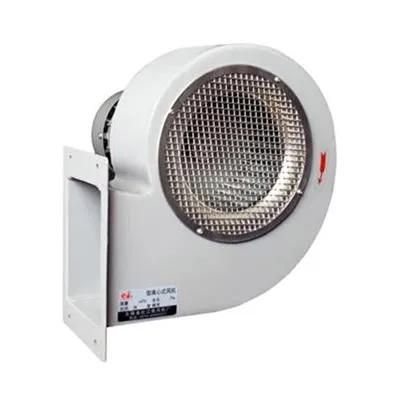
L Centrifugal Dryer Fan for Drying Machine Cooling Motor ...
-

China Mini Centrifugal Blower Ventilation Fan Factory Sup...
-

380V 415V 440V Low Noise Marine Centrifugal Ventilation B...
-

Monster Industrial Centrifugal Blower |blower Industrial Fan