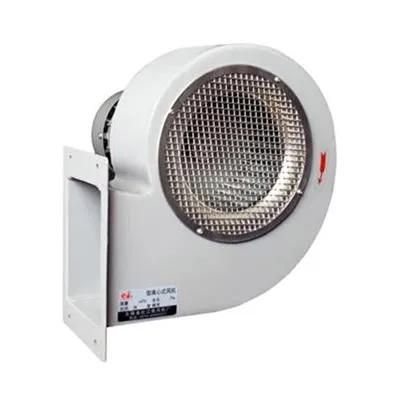
Common Problems with Forward Curved Centrifugal Fans and How to Solve Them
Mar 27, 2026
The most dangerous thing about a forward curved centrifugal fan isn't when it breaks down. It's when it looks like it's running perfectly fine, right up until the shaft snaps.
Last month, I was called to a commercial HVAC mechanical room where a rooftop unit had completely seized. The facility manager was baffled. "It was running smooth yesterday," he said. "There was no warning, no weird noise."
When we pulled the impeller, the truth was obvious. A microscopic, uneven layer of sticky dust had accumulated on the shallow forward-curved blades over six months. It wasn't enough to choke the airflow, but it was just enough to destroy the dynamic balance. The resulting high-frequency vibration fatigued the bearing until it literally disintegrated.
After 15 years of engineering industrial airflow with Wuxi JN Fan Factory, I can tell you that forward curved fans are incredible for moving high volumes of clean air quietly. But they have specific mechanical quirks. If you don't understand their weaknesses, they will cost you dearly in downtime.
Here are the three most common problems we see in the field with forward curved centrifugal fans, and exactly how to solve them.
Problem 1: The "Silent Killer" – Impeller Imbalance from Micro-Buildup
The Reality: Because forward curved blades are shallow and scoop-shaped, they act like tiny dust catchers. Even in "clean" commercial environments, humidity and microscopic particulates will stick to the leading edge of the blades. Unlike backward curved fans where dust might slide off, forward blades hold onto it. This uneven buildup creates a massive imbalance, leading to bearing failure and structural fatigue.
How to Solve It:
Implement Preventative Cleaning: Don't wait for the vibration alarm to trip. Schedule internal inspections and cleanings every 6 to 12 months, depending on the environment.
Design for Access: When ordering from Wuxi JN Fan Factory, we can customize the housing with large, hinged inspection doors specifically positioned for easy impeller cleaning, so your maintenance team doesn't have to dismantle the ductwork.
Upgrade the Coating: For slightly harsher environments, we can apply a specialized anti-stick epoxy coating to the impeller, making it much harder for dust and moisture to adhere to the blades.
Problem 2: Motor Burnout – The "Overloading" Power Curve Trap
The Reality: This is the number one reason forward curved fans burn out motors prematurely. It comes down to physics. A forward curved fan has a "overloading" power curve. This means as the airflow increases, the power required by the motor increases.
If your ductwork gets a massive leak, or an operator accidentally opens all the bypass dampers, the system resistance drops. The fan suddenly moves way more air than it was designed for, pulling maximum current and tripping the breaker or frying the motor windings.
How to Solve It:
Strict System Matching: You must calculate the exact system resistance curve. At Wuxi JN Fan Factory, our engineering team doesn't just pick a fan model; we map your exact duct layout to ensure the operating point sits safely in the middle of the fan curve, far away from the overload zone.
Install a VFD or Throttle: The easiest field fix is to install a Variable Frequency Drive or inlet dampers to physically limit the fan's maximum speed/airflow, ensuring the motor never draws more than its rated amps.
Upsize the Motor: If the system is prone to sudden resistance drops, specify a motor with a higher Service Factor (e.g., 1.15 or 1.25) to handle the temporary power spikes.
Problem 3: Excessive Vibration and Belt Wear
The Reality: Many large forward curved fans are belt-driven to allow for speed adjustments. But because these fans operate at relatively low RPMs to keep noise down, they are highly sensitive to belt tension issues. If the belts are too tight, they put massive radial load on the fan shaft, bending it slightly and destroying the bearings. If they are too loose, they slip and squeal.
How to Solve It:
Laser Alignment: Throw away the old "string and straightedge" method. We mandate the use of laser alignment tools to ensure the motor pulley and fan pulley are perfectly parallel.
Proper Tensioning: Use a sonic tension meter to set the exact belt tension specified by the manufacturer.
Heavy-Duty Components: When you buy from Wuxi JN Fan Factory, our belt-driven models come standard with premium SKF or FAG bearings, and we utilize heavy-duty, self-aligning pillow block housings to absorb minor misalignments and extend bearing life.
Stop Replacing, Start Engineering
A forward curved centrifugal fan is a highly efficient tool when applied correctly, but it is not "install and forget." It requires an understanding of its power curve and a commitment to basic maintenance.
If your facility is constantly battling bearing failures, motor burnouts, or unexplained vibrations, stop just swapping out parts. Let's fix the root cause.
Send your current fan specifications, system layout, and the specific problems you are facing to the engineering team at Wuxi JN Fan Factory. We will provide a free system review, diagnose the root cause of your failures, and engineer a robust, long-lasting solution.
Contact Wuxi JN Fan Factory today, and let's keep your airflow running smoothly and quietly.