What Is a Centrifugal Fan? Working Principle, Types and Applications
Mar 30, 2026
In industrial ventilation work, I've noticed a recurring pattern: many people talk about airflow problems before they actually understand the equipment moving the air.
I still remember a commissioning project in a metal workshop where the client insisted their ventilation system was "too weak." They had already replaced the fan once, increased motor power, and adjusted ducting-yet the welding fumes were still accumulating above the workstations.
When we inspected the system, the issue wasn't the installation quality. It was a mismatch between the type of fan being used and the actual resistance and airflow conditions in the facility.
That system was based on a centrifugal fan-but not the right configuration for how the system was behaving.
That experience is a good entry point to understand what a centrifugal fan actually is and why it is so widely used in industrial applications.
What Is a Centrifugal Fan?
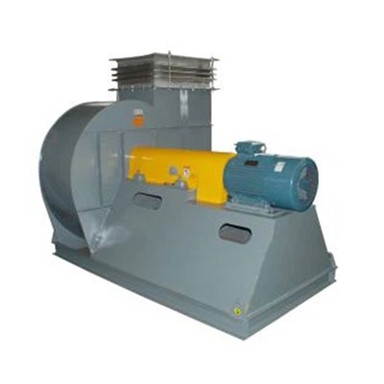
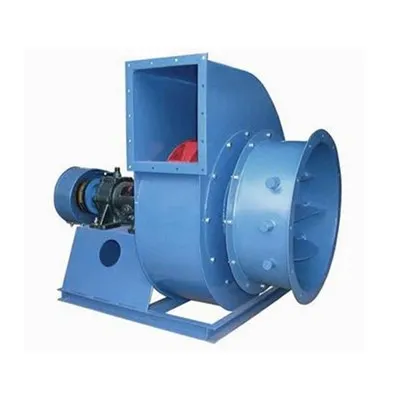
A centrifugal fan is a mechanical device designed to move air by converting rotational energy from a motor into kinetic energy in the air stream.
Instead of pushing air in a straight line like axial fans, a centrifugal fan draws air into the center of a rotating impeller and then accelerates it outward through centrifugal force before discharging it at a 90-degree angle.
In practical terms, this design allows centrifugal fans to generate higher pressure compared to many other fan types, which makes them suitable for systems with ductwork, filters, or other forms of airflow resistance.
In industrial environments, this pressure capability is often more important than raw airflow volume.
How a Centrifugal Fan Works in Real Systems
The working principle is relatively straightforward, but its real behavior in a system is where things become interesting.
Air enters the fan through the inlet and is drawn into the rotating impeller. As the impeller spins, the air is forced outward by centrifugal force into a volute casing, where velocity energy is converted into pressure energy before being discharged.
On paper, this process is stable and predictable.
In real industrial systems, however, performance depends heavily on how the fan interacts with duct resistance, filters, and airflow distribution inside the facility.
I've seen cases where a centrifugal fan performed exactly as specified, but the system still failed to deliver expected ventilation results because airflow paths inside the building were not properly designed.
That is why centrifugal fans should always be evaluated as part of a system, not as standalone equipment.
Main Types of Centrifugal Fans
Over the years, I've worked with different centrifugal fan configurations, and each behaves differently under real operating conditions.
Forward curved centrifugal fans are commonly used in HVAC systems where airflow requirements are moderate and noise levels need to be controlled. They are compact and efficient at lower static pressure conditions.
Backward curved centrifugal fans are typically used in more demanding industrial environments where system resistance is higher and operating conditions vary over time. They tend to offer better stability under load changes.
There are also radial blade designs, which are often used in heavy-duty applications involving dust, particles, or abrasive air streams. These fans are built for durability rather than efficiency optimization.
Each type has its place, but selecting the correct one depends entirely on system conditions rather than theoretical performance alone.
Where Centrifugal Fans Are Commonly Used
In real industrial projects, centrifugal fans are used in a wide range of environments where airflow must overcome resistance or travel through controlled systems.
In manufacturing plants, they are often used for general ventilation and process air extraction.
In welding and metal fabrication workshops, they help remove fumes and maintain safer working conditions.
In HVAC systems, they are widely used in air handling units where air must pass through filters, coils, and duct networks.
In chemical and process industries, they are used for handling contaminated or corrosive air streams where controlled extraction is required.
In many of these applications, the common factor is not just airflow demand-it is system resistance and air quality control.
Why System Design Matters More Than Fan Selection Alone
One of the most important lessons I've learned from field experience is that centrifugal fans rarely fail on their own.
When performance issues appear, the root cause is often related to system design-duct layout, airflow distribution, filter loading, or changes in operating conditions over time.
I once worked on a facility where repeated fan upgrades failed to resolve poor ventilation performance. After analyzing the system, we found that airflow was being disrupted by poorly positioned extraction points and unbalanced duct branches.
Once the airflow design was corrected, the system performed effectively without changing the fan again.
This kind of situation is very common in industrial ventilation work.
Key Selection Considerations in Real Projects
When selecting a centrifugal fan, real-world engineering considerations go beyond airflow numbers on a datasheet.
System resistance, duct configuration, operating environment, maintenance conditions, and long-term performance stability all play a role in determining whether a fan will perform correctly in practice.
In many projects I've worked on, the most successful outcomes came from matching fan characteristics to system behavior rather than simply selecting the highest-rated model.
A centrifugal fan is one of the most widely used air movement devices in industrial and HVAC systems, valued for its ability to generate pressure and operate effectively under resistance.
However, its real-world performance depends not only on design specifications but also on how well it is integrated into the overall ventilation system.
In practical engineering applications, success comes from understanding airflow behavior inside the facility and selecting the right centrifugal fan type based on system conditions rather than theoretical assumptions.
At Wuxi JN Fan Factory, this system-level approach is consistently applied across industrial ventilation projects to ensure that each solution performs reliably in real operating environments, not just on paper.