


What Is an Industrial Extractor Fan? Types, Working Principles and Applications
Mar 01, 2026
A few years ago, I was called to a metal fabrication workshop where the production manager was clearly frustrated.
He said they had already installed multiple fans across the shop floor, but the working environment still felt uncomfortable-especially during peak production hours.
When I walked through the site, I quickly understood why.
The problem was not airflow volume.
The real issue was that they were not using a proper industrial extractor fan system designed for removing contaminants at the source.
In many factories I've worked with since then, I've seen the same misunderstanding repeated again and again. People assume ventilation is simply about "moving air," when in reality, industrial environments require controlled extraction of heat, fumes, dust, and airborne pollutants.
What an Industrial Extractor Fan Actually Does in a Factory
An industrial extractor fan is not just a large ventilation device.
Its real function is to remove contaminated air directly from the working environment and replace it with cleaner air in a controlled and predictable way.
In real industrial conditions, air is rarely clean. It often contains welding fumes rising above workstations, fine dust generated during cutting or grinding, chemical vapors released during production processes, excessive heat accumulating around machinery, smoke in certain operations, and humidity that makes the environment feel heavy and unstable.
This is exactly where a properly designed industrial extractor fan becomes critical.
It is not installed to "circulate air."
It is installed to actively extract unwanted airborne elements before they spread throughout the facility.
How an Industrial Extractor Fan Works in Real Engineering Projects
From a technical standpoint, the working principle is straightforward.
The fan creates a negative pressure zone, which draws contaminated air toward the extraction point. Once captured, the air is discharged through ducting or expelled outside the building, while fresh air naturally enters the space to maintain balance.
On paper, this process looks simple.
In real projects, however, airflow behavior inside industrial buildings is far more complex.
I once worked on a machining workshop where operators complained about persistent oil mist in the air even after installing a relatively powerful industrial extractor fan system. The initial assumption was that the fan capacity was insufficient.
After conducting on-site airflow testing, we discovered that the fan itself was performing exactly as designed. The real issue was that the extraction points were positioned too far away from the actual source of contamination.
The system was moving air effectively, but it was not capturing pollutants where they were being generated.
This is a very common mistake in industrial ventilation design.
Main Types of Industrial Extractor Fans Used in Industry
In practical engineering applications, different types of industrial extractor fans are selected based on system resistance, installation layout, and process requirements.
Centrifugal fans are widely used in systems where air must pass through ductwork, filters, or other resistance components. They are often chosen in factories where stable airflow is required even under higher pressure conditions.
Axial fans are typically used in large open environments such as warehouses or production halls where the goal is to move large volumes of air with relatively low resistance.
Roof-mounted industrial extractor fan systems are commonly applied in facilities where hot air naturally rises and can be removed more efficiently from the upper structure of the building, improving overall airflow efficiency without major internal modifications.
Each type serves a different purpose, but in real projects, the final selection depends more on actual airflow behavior inside the facility than on theoretical specifications alone.
Industrial Extractor Fan Applications Across Different Industries
Over the years, I've seen industrial extractor fan systems used across a wide range of industries, each with its own ventilation challenges.
In welding and fabrication workshops, the primary issue is usually welding fumes that accumulate quickly around workstations if not properly extracted at the source.
In manufacturing plants, heat generated by continuous machine operation combined with dust or airborne particles often creates uncomfortable and unstable working conditions.
In chemical processing environments, the focus shifts toward controlling potentially corrosive or hazardous vapors that cannot be allowed to accumulate in enclosed spaces.
In food processing facilities, ventilation is typically used to manage heat, humidity, and odor while maintaining stable production hygiene conditions.
Even in large logistics warehouses, ventilation becomes a critical factor during summer months when heat buildup affects both working efficiency and equipment performance.
How to Choose the Right Industrial Extractor Fan
In most engineering discussions with clients, I rarely start with equipment specifications.
Instead, I start with the environment.
What exactly needs to be removed from the air? Where is it being generated? How is air currently moving inside the building? And what obstacles exist in the airflow path?
Only after understanding these real conditions does industrial extractor fan selection become meaningful.
Because in practice, a correctly designed ventilation system with moderate fan capacity will always outperform an oversized fan installed in a poorly designed system.
Field Experience: Why System Design Matters More Than Fan Size
One project that clearly illustrates this involved a factory that insisted on upgrading to a larger industrial extractor fan to solve their ventilation problem.
However, after analyzing airflow conditions on-site, it became clear that the issue had nothing to do with fan performance.
The extraction points were not aligned with the actual heat and fume generation zones, and airflow inside the workshop was being disrupted by equipment layout and structural obstacles.
Once the extraction system was redesigned and airflow paths were corrected, the improvement was immediate-even without changing the fan size.
This type of situation is something I have encountered repeatedly in different industrial facilities.
Industrial extractor fans play an essential role in maintaining safe, stable, and efficient working environments in modern industrial facilities.
However, in real engineering practice, successful ventilation is rarely determined by equipment size or specifications alone.
It depends on understanding how air behaves inside the facility, identifying where contaminants are generated, and designing a system that removes them effectively at the source.
At Wuxi JN Fan Factory, this engineering-driven approach has been applied across a wide range of industrial ventilation projects, ensuring that each system is designed based on real working conditions rather than theoretical assumptions.
You Might Also Like
-

T35 BT35 Explosion Proof Axial Flow Fan High Flow Air Blo...
-

37kw Motor V-Belt Drive Centrifugal Blower Dust collect Fan
-

DF Muti-blade Low Noise Small Centrifugal Fan Air Blower ...
-
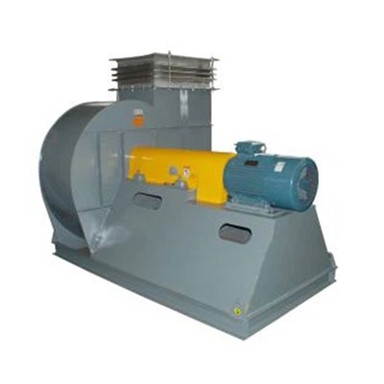
Centrifugal Fan For Thermal Power Plant
-

Air Supply Purification Draught Centrifugal Blower Fan Wi...
-

Direct Driven Centrifugal Fan Blower Fan Exhaust