


How to Choose the Right Industrial Extractor Fan for Your Facility
Mar 03, 2026
I've been involved in industrial ventilation projects for years, and if there's one pattern I keep seeing, it's this: most facilities don't actually struggle because they lack an extractor fan. They struggle because the fan they chose doesn't match how air behaves inside their building.
I still remember a metal workshop where the client told me, quite confidently, that upgrading to a larger industrial extractor fan would solve their heat and fume problems. But when I walked the floor, it was obvious the equipment was not the real issue. The airflow simply wasn't reaching the areas where fumes and heat were being generated.
That experience is not unusual. In fact, it's the norm.
Choosing the right industrial extractor fan is less about picking a model from a catalog and more about understanding your facility as a complete airflow system.
Start with the Actual Problem, Not the Fan
One of the biggest mistakes I see in industrial projects is starting the selection process with equipment specifications.
In reality, you should always start with what you are trying to remove from the air.
In most factories, the issue is rarely just "poor ventilation." It is usually a combination of welding fumes lingering above workstations, dust generated during cutting or grinding operations, heat accumulating around production equipment, chemical vapors released during processes, smoke in certain operations, or humidity that makes the environment feel heavy and unstable.
An industrial extractor fan is not there to "make air move." It exists to remove these specific contaminants from the working environment before they spread.
Understand How Air Moves Inside Your Facility
Before selecting any fan, it is critical to understand how air actually behaves in your space.
In theory, air moves in a clean and predictable way. In real factories, it does not. It is influenced by machine layout, building height, heat sources, door openings, production flow, and even operator movement.
I once worked on a machining facility where operators complained that oil mist kept returning even after installing a relatively powerful extraction system. On paper, everything looked correct. Airflow capacity was sufficient, and the fan was operating within specification.
But on-site measurements told a different story. The extraction points were not aligned with where the contamination was being generated, and airflow was being disrupted by large equipment blocking natural movement paths.
Once we adjusted the extraction positioning, the issue disappeared without changing the fan itself.
This is why system understanding always comes before equipment selection.
Match Fan Type to System Resistance
Different industrial extractor fans behave differently depending on system conditions.
In facilities where ductwork is long or includes filters, resistance becomes a major factor. In these cases, centrifugal fan systems are typically more stable because they can maintain performance under higher static pressure conditions.
In contrast, axial fan systems are usually more suitable for large open environments such as warehouses or production halls, where airflow can move freely without significant resistance.
There is also a third category often used in buildings where heat naturally rises toward the roof. In these cases, roof-mounted extraction systems can take advantage of natural airflow behavior and improve efficiency without major structural changes.
The key point is not choosing the "best fan," but choosing the fan that matches your system conditions.
Consider Airflow Capacity, but Don't Start There
Airflow capacity is important, but it is often misunderstood.
Many facility owners assume that a higher airflow rating automatically solves ventilation problems. In practice, this only works if the airflow is directed correctly.
I have seen facilities install high-capacity fans that still failed to improve working conditions simply because the extracted air was not being captured at the source of contamination.
A properly designed industrial extractor fan system with moderate airflow will always outperform an oversized system that is poorly positioned.
Evaluate Static Pressure Requirements Carefully
Static pressure is one of the most overlooked factors in fan selection.
Every component in the system creates resistance-duct length, bends, filters, dampers, and even outlet design.
If static pressure is underestimated, the fan may appear to be working normally while actually failing to move air effectively through the system.
In real projects, this often shows up as weak extraction performance at the far end of the duct system, even when the fan is running at full speed.
Think About Maintenance from the Beginning
One thing I always tell clients is that maintenance is not something to consider after installation-it should influence selection from day one.
If a fan is installed in a location that is difficult to access, even a well-designed system will eventually suffer from reduced performance simply because routine inspection and cleaning are delayed.
In industrial environments with dust, fumes, or grease, this becomes even more important.
A Field Lesson That Changed My Approach
One project that stayed with me involved a factory that insisted on replacing their entire ventilation system due to poor air quality.
After inspection, we discovered that the fan itself was not the problem at all. The real issue was inconsistent airflow distribution caused by poor duct layout and improper extraction points.
Instead of replacing equipment, we redesigned the airflow path.
The improvement was immediate.
That project reinforced something I've seen many times since: industrial extractor fan selection only works when it is part of a system-level design approach.
Choosing the right industrial extractor fan is not a simple equipment decision. It is an engineering process that starts with understanding your facility, identifying the real source of air quality issues, and designing airflow paths that actually match how your production environment operates.
Fan specifications matter, but they are only part of the equation.
In real industrial applications, the best results always come from matching the fan to the system-not forcing the system to fit the fan.
At Wuxi JN Fan Factory, this is the approach we've consistently applied across different industrial ventilation projects, ensuring that each solution is based on real working conditions rather than theoretical assumptions.
You Might Also Like
-

Industrial Extractor Fan Forward Curved Centrifugal Fan
-
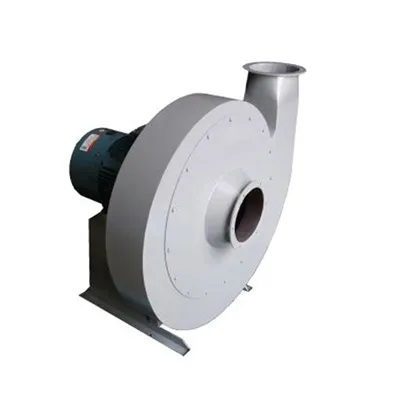
Centrifugal Direct Drive Fans Industrial Pressure Blower
-

G4-73 Y4-73 Mine Ventilation Air Extractor Industrial Cen...
-

Y8-39 Y9-38 Heavy Duty Heat Powered Stove Furnace 22kw 30...
-
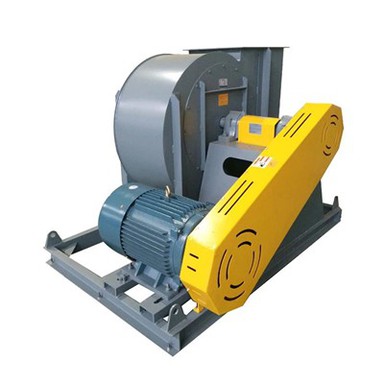
Industrial Centrifugal Fans And Blowers | Radial Fan Blowers
-

High Temperature ID Centrifugal Blower Fan For RCO System