


What Is a Blower Fan Centrifugal? Types, Working Principle and Industrial Applications Explained
Jun 01, 2026
If you've searched for a blower fan centrifugal, chances are you're not looking for a textbook definition. You're probably trying to answer a more practical question: Will this type of blower work for my system? Whether you're designing a dust collection line, upgrading a boiler air supply, or solving an airflow issue in an industrial plant, choosing the wrong fan can lead to low efficiency, excessive noise, or unexpected downtime.
At Wuxi JN Fan Factory, we've been helping customers select industrial centrifugal blower fans for many years. One thing we've learned from working with engineers, EPC contractors, and plant maintenance teams is that many problems are not caused by poor equipment-they're caused by selecting the wrong type of fan for the application.
In this article, we'd like to share our engineering perspective on what a blower fan centrifugal is, how it works, the different types available, and where it performs best.
What Is a Blower Fan Centrifugal?
A blower fan centrifugal, also known as a centrifugal blower, centrifugal fan, or industrial blower fan, is a mechanical device that increases air pressure by using a rotating impeller. Unlike an axial fan, which moves large volumes of air at relatively low pressure, a centrifugal blower changes the direction of airflow by approximately 90 degrees, generating much higher static pressure.
This design makes centrifugal blowers suitable for applications where air must travel through long ducts, filters, cyclones, heat exchangers, or other systems that create resistance.
Many customers initially ask us whether they need a high-pressure blower simply because their airflow seems insufficient. In reality, airflow problems are often caused by system resistance rather than fan capacity. Understanding this difference before purchasing can save both time and money.
How Does a Centrifugal Blower Work?
The working principle is straightforward.
Air enters the center of the impeller through the inlet. As the impeller rotates at high speed, centrifugal force pushes the air outward toward the edge of the wheel. The volute casing then converts part of this velocity into pressure before the air exits through the discharge outlet.
This combination of airflow acceleration and pressure conversion allows a centrifugal blower fan to maintain stable performance even in systems with significant pressure losses.
From our project experience, we often see customers focus only on motor power. However, impeller diameter, blade design, rotational speed, and system resistance usually have a much greater influence on overall performance than simply installing a larger motor.
Common Types of Blower Fan Centrifugal
Selecting the correct fan begins with understanding the different impeller designs.
- Forward Curved Centrifugal Fan
Forward curved fans use many small blades and are ideal for high airflow with relatively low pressure. They are commonly used in HVAC systems, commercial ventilation, and air conditioning equipment where quiet operation is important.
- Backward Curved Centrifugal Fan
Backward curved impellers provide higher efficiency and lower power consumption. We frequently recommend this design for continuous industrial operation because it delivers stable performance and lower operating costs over the long term.
- Radial Blade Centrifugal Blower
Radial blade blowers are designed for demanding environments containing dust, particles, fibers, or abrasive materials. Industries such as cement, woodworking, mining, and steel manufacturing often choose this configuration because of its durability and easier maintenance.
- High-Pressure Centrifugal Blower
When applications involve pneumatic conveying, combustion air, or industrial drying systems, higher pressure becomes essential. In these cases, high-pressure centrifugal blowers are usually the preferred solution.
- Where Are Blower Fan Centrifugal Systems Used?
One of the questions we receive most frequently is, "Which industries actually use centrifugal blowers?"
The answer is almost every industrial sector where controlled airflow is required.
Typical applications include:
- Dust collection systems
- Boiler combustion air supply
- Cement production plants
- Steel manufacturing
- Chemical processing
- Food processing facilities
- Grain conveying systems
- Wastewater treatment plants
- Industrial drying equipment
- Material handling and pneumatic conveying
A recent project illustrates this well. One customer operating a powder processing line initially believed they needed a larger blower because material transport had become unstable. After reviewing the duct layout, filter pressure drop, and operating conditions, we found that the existing blower itself wasn't undersized. The system resistance had increased significantly after additional filtration equipment was installed. By selecting a different impeller configuration rather than simply increasing motor size, the conveying efficiency improved while energy consumption remained under control.
Experiences like this remind us that blower selection should always begin with the entire system-not just airflow specifications.
Centrifugal Blower vs. Axial Fan
Many buyers compare centrifugal blower vs axial fan before making a decision.
If your application requires moving fresh air through open spaces with minimal resistance, an axial fan is often sufficient.
However, if the air must pass through filters, ductwork, baghouses, cyclones, or industrial equipment, a centrifugal blower usually provides much better performance because it maintains pressure even under heavy system loads.
This is why industrial ventilation systems, dust extraction systems, and process air systems rely heavily on centrifugal technology.
How to Choose the Right Industrial Centrifugal Blower
Instead of selecting a blower solely by airflow, we always recommend evaluating several factors together:
- Required airflow
- Static pressure
- Air temperature
- Dust or particle concentration
- Installation environment
- Continuous operating hours
- Noise requirements
- Energy efficiency goals
At Wuxi JN Fan Factory, our engineering discussions with customers usually begin with their process rather than our product catalog. Once we understand the operating conditions, we can recommend the appropriate industrial centrifugal blower, impeller design, material, motor configuration, and drive method that best fit the application.
Final Thoughts
A blower fan centrifugal is much more than a machine that moves air. It is a critical component that determines the efficiency, stability, and operating cost of an entire industrial system.
Understanding the differences between centrifugal blower types, working principles, pressure characteristics, and application requirements helps avoid costly mistakes during equipment selection.
At Wuxi JN Fan Factory, we've found that the most successful projects start with asking the right questions rather than choosing the biggest fan. Every ventilation or process system has unique operating conditions, and the best centrifugal blower is the one that matches those conditions-not necessarily the one with the highest specifications.
If you're planning a new project or replacing an existing industrial blower fan, taking time to evaluate the complete system before selecting equipment will almost always deliver better long-term performance, lower maintenance costs, and higher energy efficiency.
You Might Also Like
-

T35 BT35 Explosion Proof Axial Flow Fan High Flow Air Blo...
-

G4-68 Y4-68 Coupling Drive High Temperature Resistant Suc...
-

PLS310 Dehumidification Arefaction Centrifugal Blower Fan
-
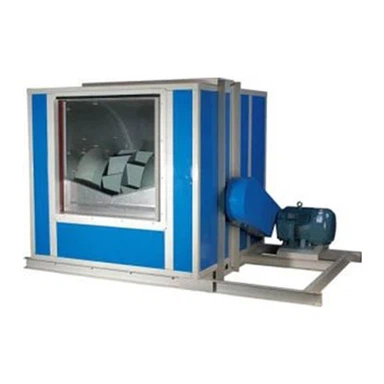
DCBF Backward Curved Impeller Counter Air Condition Centr...
-
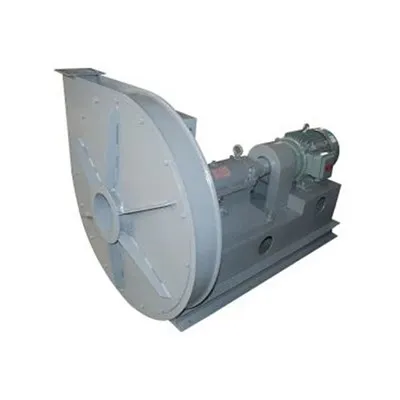
Centrifugal Fan For Smelting Furnace
-

Building Ventilation Blower Fan