


What Makes a Good Centrifugal Air Fan?
Jan 07, 2026
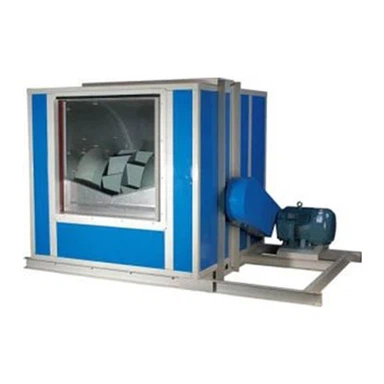
A centrifugal air fan may appear as a simple assembly of impeller, housing, and motor, but its performance in real-world applications reveals the profound difference between ordinary and exceptional engineering. For facility managers, HVAC contractors, and industrial operators, selecting the right fan isn't merely about moving air-it's about ensuring reliability, energy efficiency, and long-term operational stability across demanding environments.
The foundation of a superior centrifugal fan begins with impeller design and material selection. High-quality fans utilize aerodynamically optimized blade profiles that maximize airflow while minimizing turbulence and noise generation. The impeller should be constructed from robust materials such as hot-dip galvanized steel or stainless steel for corrosive environments, with precise balancing to prevent vibration-induced wear on bearings and motor mounts. Poorly balanced impellers not only create excessive noise but also accelerate component fatigue, leading to premature failure and costly downtime.
Motor integration represents another critical differentiator. A good centrifugal fan pairs its impeller with an appropriately sized motor featuring high-efficiency ratings (IE2 or IE3 standards), thermal overload protection, and sealed bearings resistant to dust and moisture ingress. The motor mounting must be rigid yet vibration-dampened to isolate rotational forces from the housing structure. Equally important is the drive system-direct-drive configurations eliminate belt maintenance issues, while belt-driven models require precisely aligned pulleys and high-quality timing belts to ensure consistent power transmission.
Housing construction directly impacts both performance and longevity. Well-engineered fans feature fully welded seams rather than spot-welded joints, preventing air leakage and structural flexing under pressure. The scroll design should follow logarithmic curve principles to convert kinetic energy efficiently into static pressure, while access panels facilitate easy maintenance without compromising structural integrity. Surface treatments such as powder coating or epoxy finishes provide additional protection against environmental degradation.
Application versatility separates exceptional fans from commodity products. A truly good centrifugal fan can adapt to diverse requirements-from high-static-pressure applications in dust collection systems to high-volume ventilation in commercial kitchens, from clean air handling in laboratories to corrosive gas extraction in chemical processing plants. This versatility stems from modular design principles that allow customization of inlet/outlet configurations, motor positions, and accessory integration without compromising core performance.
Ultimately, what makes a centrifugal air fan truly "good" is its ability to deliver consistent performance year after year with minimal maintenance intervention. Reliability isn't an accident-it results from deliberate engineering choices that prioritize durability over short-term cost savings, precision over expediency, and customer satisfaction over volume sales.
Wuxi JN Fan Factory
Professional Manufacturer of Centrifugal Fans & Industrial Ventilation Solutions
📍 Wuxi, Jiangsu, China - Engineering Airflow Excellence Since 2003
You Might Also Like
-

Centrifugal Blower Impeller Radial Fan Impeller
-

Direct Drive Axial Fan Low Noise Axial Fan
-
DCBF Backward Curved Impeller Counter Air Condition Centr...
-

Cement Mill Blower Forced Ventilation Centrifugal Fan Sme...
-

Industrial Boiler Induced Forced Draught Secondary Air Bl...
-

High Temperature ID Centrifugal Blower Fan For RCO System