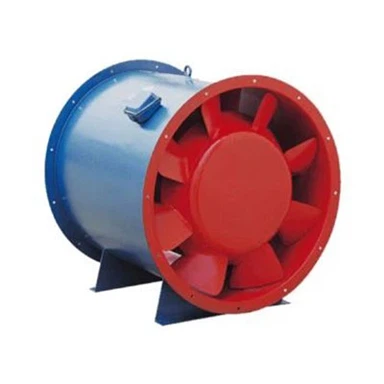
How to Maintain Your Centrifugal Fan?
Dec 17, 2025
To ensure your centrifugal fan operates in its high-efficiency range for extended periods, routine maintenance is more cost-effective than reactive repairs. The following seven steps, packaged with the latest manufacturer's manual and field case studies, can help you reduce failure rates by 60% and keep energy efficiency losses below 3%.
1. Daily "Listen and Observe": Before starting, listen for metal-to-metal friction in the bearings and observe if the impeller is rubbing against the casing. During operation, observe the current; if it is 10% higher than the nameplate value and the piping is not blocked, it is likely due to impeller dust accumulation or belt slippage, requiring immediate shutdown and cleaning.
2. Weekly Dust Cleaning to Maintain Impeller Dynamic Balance: Use a soft brush or low-pressure air to blow away dust from the blades and the inner wall of the volute to prevent dust accumulation from disrupting the dynamic balance. One cement plant adhered to "blowing for 5 minutes every shift," extending bearing life from 18 months to 30 months and reducing vibration speed by 40%.
3. Monthly Bearing Temperature and Lubrication Checks
A bearing housing temperature rise ≤ 40 K is considered good; if it feels hot to the touch (over 70℃), add oil or replace the bearing. Lithium-based grease should fill 1/3–1/2 of the bearing cavity; excessive grease can cause overheating due to stirring. For high-speed fans (> 2900 rpm), it is recommended to add grease every 2000 hours; for low-speed fans, double the amount.
4. Belt and Coupling Alignment
Belt tension should be such that it depresses the belt 10–15 mm with your thumb. Synchronous belts or couplings should be aligned with a dial indicator; radial deviation ≤ 0.05 mm. Otherwise, the bearing will bear additional radial force, shortening its lifespan by more than 30%.
5. Seal and Flexible Connection Inspection
Damaged canvas flexible connections can cause air leakage and surge; worn volute shaft seals can allow dust to enter the bearing cavity. If grinding holes or leaks of hard particles are found, replace the bearing within one week to prevent small cracks from widening and increasing system resistance.
6. End-of-Quarter Tightening and Rust Prevention
Check the torque of the base and vibration damper bolts; for outdoor fans, add a waterproof cover to the motor and apply rust-preventive oil to exposed shaft journals. In coastal environments, it is recommended to spray an aluminum-zinc coating every six months to prevent pitting corrosion of the casing and subsequent dynamic imbalance.
7. Annual Performance Check
Measure the actual airflow and total pressure using an airflow hood and micro-manometer, comparing it to the factory curve; if efficiency drops by more than 5%, check if the blade tip clearance has increased due to wear and if the impeller has accumulated dust. Timely correction can bring energy consumption back to the design value, saving 4%–7% of electricity.
By recording these seven steps in the equipment log and setting reminder cycles, your Centrifugal Fan can continuously operate in a high-efficiency, low-noise, and low-failure range, providing stable airflow to the production line while quietly reducing electricity costs.