


Common Centrifugal Fan Problems and Troubleshooting Guide
Apr 10, 2026
"Kill the power!" I yelled over the deafening screech of metal on metal, reaching past the maintenance supervisor to hit the emergency stop. The massive centrifugal exhaust fan was shaking so violently it was literally walking across its concrete pad.
The supervisor looked at me, wiping grease off his forehead. "We just replaced the bearings last week," he shouted. "How is it already failing?"
I didn't need to open the housing to know the answer. They had replaced the bearings, but they hadn't fixed the root cause. After 15 years of troubleshooting industrial airflow with Wuxi JN Fan Factory, I can tell you that 90% of fan failures aren't manufacturing defects. They are the result of misdiagnosing the symptoms.
Here is the field reality behind the three most common centrifugal fan problems, and how to actually fix them instead of just replacing parts.
Problem 1: Excessive Vibration and Rapid Bearing Failure
The Reality: When a fan starts shaking, the immediate reaction is to blame the bearings and swap them out. But bearings are just victims; they die because of excessive radial load. The real culprits are almost always impeller imbalance or shaft misalignment. If the air stream contains even a little moisture or dust, it will build up unevenly on the blades, destroying the dynamic balance. Alternatively, if the motor and fan pulleys aren't perfectly aligned, the shaft will bend slightly under load, shredding the bearings in weeks.
The Fix:
Stop replacing bearings blindly. First, check the impeller. If it's dirty, clean it. If it's worn or damaged, it needs professional dynamic balancing.
Ditch the straightedge. At Wuxi JN Fan Factory, we mandate laser alignment tools for every installation. Guessing the alignment with a string will cost you thousands in downtime.
Problem 2: Motor Overheating and Tripping Breakers
The Reality: This is the classic "more is better" trap. An operator notices the factory feels stuffy, so they open all the duct dampers to "get more air." Suddenly, the motor overheats and trips the breaker.
Here is the physics they missed: depending on the blade profile, a centrifugal fan's power draw increases as it moves more air. By opening the dampers, the operator dropped the system resistance, pushing the fan to operate far to the right on its performance curve. The fan is now moving way more air than the motor was sized to handle, drawing maximum amps and frying the windings.
The Fix:
Throttle the system. Close the dampers slightly to increase system resistance and bring the operating point back to the center of the fan curve.
Install a VFD. The best long-term fix is adding a Variable Frequency Drive (VFD). It allows you to dial in the exact RPM needed, physically preventing the motor from ever drawing more than its rated current.
Problem 3: "It's Not Pulling Hard Enough"
The Reality: The fan is running, the motor sounds fine, but the air at the end of the duct is barely moving. The maintenance team usually assumes the fan is undersized and starts asking for quotes on a bigger unit.
Before you spend capital on a new fan, check the basics. 80% of the time, the issue is system resistance being much higher than calculated. A crushed section of spiral duct, a forgotten closed fire damper, or a heavily clogged HEPA filter will choke a centrifugal fan instantly. And the most embarrassing one we see? The electrical contractor wired the motor backwards, and the impeller is spinning in the wrong direction.
The Fix:
Check the rotation. Stand in front of the inlet. The impeller should be pulling air into the housing, not pushing it out. Swap two motor leads if it's backwards.
Measure static pressure. Install a manometer. If the static pressure is drastically higher than the fan's design point, you have a duct restriction. Find the blockage before you buy a bigger motor.
Stop Guessing, Start Troubleshooting
A centrifugal fan is a robust piece of engineering, but it demands respect for the system curve. If you are constantly battling vibration, motor burnouts, or poor airflow, stop throwing money at replacement parts.
Send your current fan specs, motor amp draws, and system layout to the engineering team at Wuxi JN Fan Factory. We will analyze your operating point, diagnose the root cause, and tell you exactly how to fix it.
Contact Wuxi JN Fan Factory today, and let's get your system running smoothly.
FAQ
Q: Why does my centrifugal fan keep burning out the motor?
A: The most common cause is operating the fan too far to the right on its performance curve (moving too much air). This happens when system resistance drops (e.g., dampers are fully open). The motor draws excessive current and overheats. Installing a VFD or throttling the inlet dampers will fix this.
Q: How do I fix excessive vibration in a centrifugal fan?
A: Do not just replace the bearings. Excessive vibration is usually caused by an unbalanced impeller (due to dust buildup or wear) or severe shaft misalignment. Clean and dynamically balance the impeller, and use a laser tool to perfectly align the motor and fan shafts.
Q: Why is my centrifugal fan running but not moving enough air?
A: First, check if the motor is spinning in the correct direction. If rotation is correct, the issue is almost always high system resistance. Check for closed dampers, crushed ductwork, or heavily clogged filters that are choking the airflow.
You Might Also Like
-
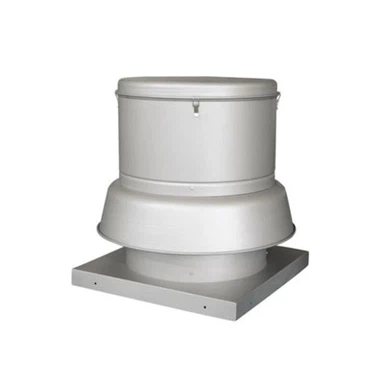
Industrial Centrifugal Roof Exhaust Fan Ventilator for Fa...
-

Axial Roof Top Ventilator Exhaust Blower Fan Prices Smoke...
-

China 3000 Cfm Centrifugal Blower Fan 5000 Cfm Factory Su...
-

Small Centrifugal Blowers | Multistage Centrifugal Blowers
-
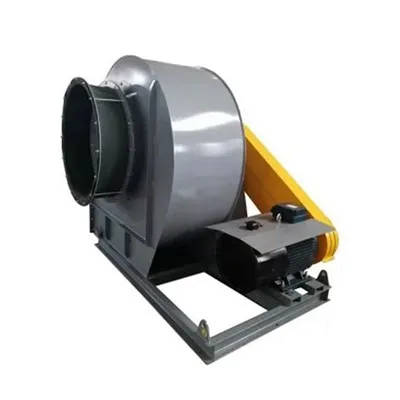
Large Capacity 37kw Centrifugal Blower Fans For Industria...
-

Industrial Centrifugal Blower Fans For Waste Gas Treatmen...