


Backward Curved vs Forward Curved Centrifugal Fans: Which One Do You Actually Need?
Mar 20, 2026
"Hand me the vibration meter," I told my technician, pointing at the massive exhaust unit shaking the steel platform. The plant manager was standing next to me, looking stressed. "We just replaced the bearings last month," he shouted over the roar. "How is it failing again?"
I didn't even need the meter to diagnose the issue. I just asked his maintenance guy to unlock the inspection door. Sure enough, a thick, uneven layer of sticky wood dust had coated the fan impeller. They had installed a forward curved fan in a woodworking dust collection system. It was a classic, expensive mistake.
After 15 years of troubleshooting industrial airflow with Wuxi JN Fan Factory, I can tell you that 80% of premature fan failures aren't caused by bad motors or poor manufacturing. They are caused by specifying the wrong blade profile for the job.
Let's cut through the engineering textbooks and look at the real-world differences between backward curved and forward curved centrifugal fans, and how to choose the right one for your specific application.
The Core Difference: "Volume" vs. "Muscle"
When you look inside the fan housing, the difference is immediately obvious.
A forward curved fan (often called a "squirrel cage") has dozens of shallow blades curving in the direction of rotation. Because there are so many small blades grabbing the air at once, it acts like a massive scoop. It moves a huge volume of air very easily, but it lacks the "muscle" (static pressure) to push that air through long, restrictive ductwork.
A backward curved fan has fewer, deeper blades that curve against the direction of rotation. These blades act like airfoils (similar to an airplane wing). They don't move as much raw volume as the forward curved type, but they generate massive static pressure and slice through dirty, heavy air streams with high efficiency.
The "Dust Trap" Reality: Why Blade Profile Matters
This is where the woodshop story comes back into play. The shallow, forward-sweeping blades of a forward curved fan create tiny pockets. If the air stream contains wood dust, paint overspray, welding fumes, or sticky moisture, those particles lodge inside the blade curves.
Within weeks, the impeller becomes heavily unbalanced. The vibration tears through the bearings and cracks the shaft.
Backward curved fans, on the other hand, have a smooth, open profile. They are inherently "self-cleaning." Dust and particulates simply slide off the back of the blades. If your application involves anything other than 100% clean, filtered air, a backward curved (or radial blade) fan is non-negotiable.
The Engineer's Secret: The "Non-Overloading" Power Curve
Here is a technical detail that saves our clients thousands of dollars in motor burnouts.
If you look at the power curve of a forward curved fan, the motor load continuously increases as the airflow increases. If a duct gets blocked or a damper is accidentally closed, the fan tries to pull more power, eventually tripping the breaker or burning out the motor.
Now look at a backward curved fan. It has a "non-overloading" power curve. As the airflow increases beyond its design point, the power requirement actually drops. This means if your duct system gets partially blocked, or if an operator opens a bypass damper, the motor is physically protected from drawing too much current. For critical industrial processes where downtime is not an option, this built-in mechanical safety net is a massive advantage.
How to Choose: The Field Checklist
When you are reviewing quotes for your next project, use this simple reality check:
✅ Choose Forward Curved if:
- The air is exceptionally clean.
- You need high air volume but low static pressure.
- Space and weight are highly restricted.
- Low noise is the absolute top priority.
✅ Choose Backward Curved if:
- The air contains dust, fumes, moisture, or particulates.
- You need to push air through long duct runs, filters, or scrubbers.
- Energy efficiency and lower operating costs are critical.
- You need motor protection against system blockages.
Stop Guessing, Start Engineering
Choosing between these two fan types isn't about which one is "better." It's about matching the physics of the blade to the physical reality of your air stream. Put a forward-curved just take your order and ship a box. We analyze your duct layout, your air cleanliness, and your system resistance.
Send us your required CFM, static pressure, and the type of media you are moving. Our engineering team will provide a free, honest assessment and recommend the exact blade profile that will keep your plant running smoothly for years.
Contact Wuxi JN Fan Factory today, and let's get your airflow engineered right the first time.
You Might Also Like
-

4-68 China General Purpose Building Air Ventilation Centr...
-

4-72 Backward Curved Impeller Stainless Steel Industrial ...
-

Y8-39 Y9-38 Heavy Duty Heat Powered Stove Furnace 22kw 30...
-

Industrial Centrifugal Blowers |high Temperature Fans And...
-
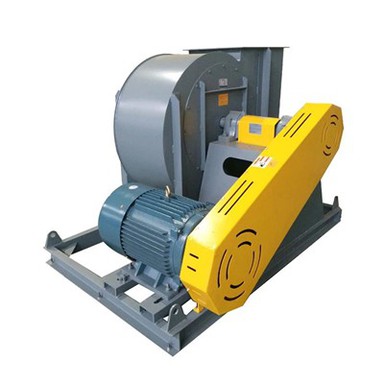
Industrial Centrifugal Fans And Blowers | Radial Fan Blowers
-

Axial Flow Blower |axial Flow Fans