

What is the impact of air damper design on air flow characteristics?
Nov 24, 2026
What is the impact of air damper design on air flow characteristics?
As a seasoned air damper supplier, I've witnessed firsthand the crucial role that air damper design plays in shaping air flow characteristics. In various industrial and commercial applications, the efficient control of air flow is essential for maintaining optimal environmental conditions, ensuring energy efficiency, and safeguarding the performance of ventilation systems. In this blog post, we'll delve into the intricate relationship between air damper design and air flow characteristics, exploring how different design elements can significantly impact the way air moves through a system.
At the core of air damper functionality is the ability to regulate the volume and direction of air flow. The design of an air damper encompasses several key factors, including its shape, size, blade configuration, and actuation mechanism. Each of these elements contributes to the overall performance of the damper and, consequently, the air flow characteristics within the system.
One of the primary considerations in air damper design is the shape and size of the damper. The cross - sectional area of the damper opening directly affects the volume of air that can pass through it. A larger damper opening allows for greater air flow, while a smaller opening restricts the flow. Additionally, the shape of the damper can influence the distribution of air. For example, a circular damper may provide a more uniform air flow compared to a rectangular one, especially in systems where symmetrical air distribution is desired.
The blade configuration of an air damper is another critical aspect. There are several types of blade designs, including parallel blade, opposed blade, and louvered blade dampers. Parallel blade dampers have blades that move in the same direction, providing a relatively linear relationship between damper position and air flow. Opposed blade dampers, on the other hand, have blades that move in opposite directions. This design offers better throttling control and can provide a more precise regulation of air flow, especially at low flow rates. Louvered blade dampers consist of a series of overlapping blades, which can be adjusted to control the amount of air passing through. They are often used in applications where a high degree of air flow control is required, such as in HVAC systems for large commercial buildings.
The actuation mechanism of an air damper also has a significant impact on air flow characteristics. Manual dampers are adjusted by hand and are typically used in applications where the air flow requirements do not change frequently. Motorized dampers, on the other hand, can be controlled remotely, allowing for precise and automated adjustment of air flow. This is particularly useful in systems that require real - time monitoring and adjustment of air flow, such as in industrial processes where environmental conditions need to be tightly controlled.
In industrial settings, the proper design of air dampers is crucial for ensuring the efficient operation of ventilation systems. For instance, in power stations and boilers, air dampers are used to control the flow of combustion air, exhaust gases, and cooling air. A well - designed air damper can help optimize the combustion process, improve energy efficiency, and reduce emissions. Consider the Induced Draught Centrifugal Fan. The air damper in this system needs to be carefully designed to ensure the proper balance of air flow, which is essential for the efficient operation of the fan and the overall power generation process.
Similarly, in industrial boilers, air dampers play a vital role in controlling the air supply for combustion. The Y5 - 48 Stainless Steel Hot Air Oven Industrial Boiler Suction Blower Exhaust Fan requires an air damper that can accurately regulate the air flow to maintain the optimal temperature and pressure within the boiler. A poorly designed damper can lead to inefficient combustion, increased fuel consumption, and potential damage to the boiler.
In the case of Boiler Centrifugal Exhaust ID Fan Forced Draft Blower, the air damper design affects not only the air flow rate but also the pressure distribution within the system. The correct balance of air flow and pressure is essential for the proper functioning of the fan and the overall ventilation of the boiler. This is where the choice of blade configuration and damper size becomes crucial. An incorrect choice can result in uneven air distribution, increased noise levels, and reduced system efficiency.
In smelting furnace applications, air dampers are used to control the intake of fresh air and the exhaust of hot gases. The Centrifugal Fan For Smelting Furnace requires a robust and reliable air damper that can withstand high temperatures and harsh environments. The design of the damper must ensure that the air flow is sufficient to support the smelting process while also preventing the ingress of contaminants.
Moreover, heavy - duty ventilation systems, such as the Y8 - 39 Y9 - 38 Heavy Duty Heat Powered Stove Furnace 22kw 30kw 45kw 55kw 75kw 90kw 110kw High Volume Industrial Ventilation Fan Blower, rely on well - designed air dampers to regulate the large volumes of air involved. These systems often operate under extreme conditions, and the air damper design needs to be able to provide stable and efficient air flow control over a wide range of operating parameters.

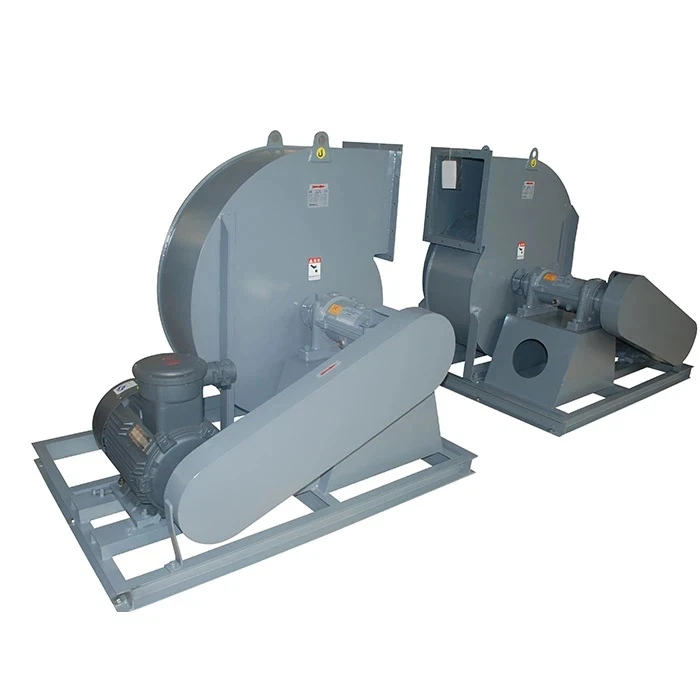
In addition to influencing air flow rate and distribution, air damper design can also affect air flow velocity. The velocity of air through a damper is critical as it can impact the performance of downstream components, such as filters and heat exchangers. A high - velocity air flow can cause increased pressure drop across the damper and other components, leading to higher energy consumption. On the other hand, a low - velocity air flow may not be sufficient to carry out the intended ventilation or heat transfer processes effectively.
Noise is another important factor affected by air damper design. A poorly designed damper can cause turbulent air flow, which in turn generates noise. This can be a significant issue in both industrial and commercial settings, where excessive noise can be a nuisance to workers and occupants. By carefully selecting the blade configuration, damper size, and actuation mechanism, it is possible to minimize air flow turbulence and reduce noise levels.
As an air damper supplier, we understand the importance of providing solutions that are tailored to the specific needs of each application. Our design and engineering team work closely with clients to analyze their air flow requirements, system constraints, and environmental conditions. We use advanced simulation tools to predict the performance of different damper designs and optimize them for maximum efficiency and reliability.
If you are in need of high - quality air dampers for your ventilation system, whether it's for a power station, industrial boiler, smelting furnace, or any other application, we are here to assist you. Our commitment to innovation, quality, and customer satisfaction ensures that you will receive the best possible air damper solutions for your specific needs. Contact us to start a procurement discussion and discover how our air dampers can improve the performance of your air flow system.