

How does the number of blades affect the performance of a radial fan?
Jul 06, 2026
Hey there! As a supplier of radial fans, I've been getting a lot of questions lately about how the number of blades affects the performance of these fans. So, I thought I'd take a deep dive into this topic and share what I've learned over the years.
First off, let's talk about what a radial fan is. A radial fan, also known as a centrifugal fan, works by using a rotating impeller to draw air in axially and then discharge it radially. These fans are widely used in various industries, including power stations, boilers, and industrial ovens. They're great for applications that require high pressure and medium to high airflow.
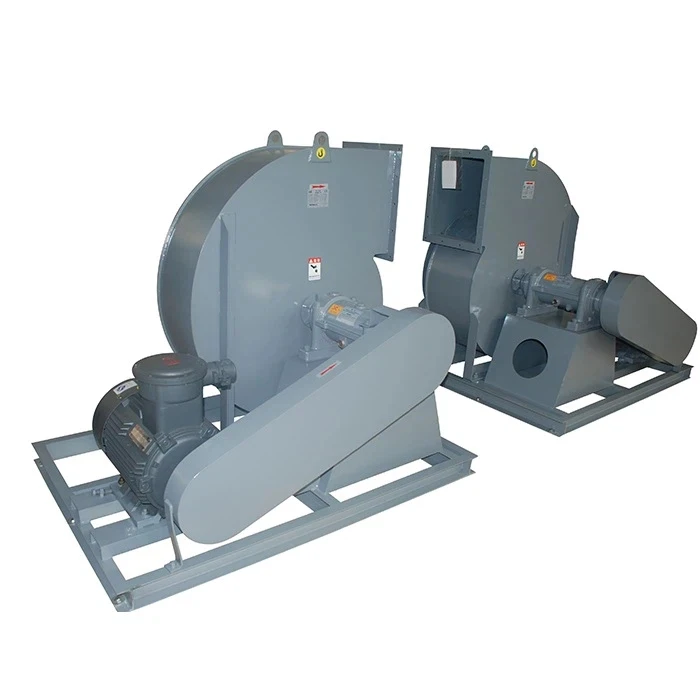

Now, let's get to the main question: how does the number of blades affect the performance of a radial fan? Well, it turns out that the number of blades can have a significant impact on several key performance factors, including airflow, pressure, efficiency, and noise.
Airflow
The number of blades on a radial fan can influence the amount of air it can move. Generally speaking, more blades can mean more surface area to push the air, which can result in higher airflow. However, this isn't always the case. If the blades are too close together, they can create turbulence and restrict the airflow. On the other hand, if there are too few blades, the fan may not be able to move enough air.
For example, in a small - scale industrial application where a moderate amount of airflow is needed, a radial fan with 6 - 8 blades might be a good choice. It can provide a decent amount of airflow without creating too much turbulence. But for a large - scale power station where high airflow is required, a fan with 10 - 12 blades could be more suitable.
Pressure
The number of blades also plays a role in the pressure that a radial fan can generate. More blades can increase the pressure because they can impart more energy to the air. When the air is forced through the fan, each blade adds a bit of extra force, which builds up the pressure.
In applications like boiler ventilation, where high pressure is needed to push the air through the system, a fan with a larger number of blades can be beneficial. For instance, our Y5 - 48 Stainless Steel Hot Air Oven Industrial Boiler Suction Blower Exhaust Fan is designed with a specific number of blades to ensure it can generate the necessary pressure for industrial boiler applications.
Efficiency
Efficiency is another important factor. A well - designed fan with an appropriate number of blades can convert more of the input power into useful airflow and pressure. If the number of blades is not optimized, the fan may waste energy in creating unnecessary turbulence or inefficiencies.
For example, a fan with too many blades might require more power to rotate, but not necessarily produce a proportionate increase in airflow or pressure. On the other hand, a fan with too few blades may not be able to use the power effectively. We've found that for most industrial applications, finding the sweet spot in the number of blades can lead to significant energy savings.
Noise
Noise is often a concern in industrial settings. The number of blades can affect the noise level of a radial fan. Generally, more blades can result in a lower - pitched noise, but they may also create more overall noise if not designed properly. Fewer blades can sometimes produce a higher - pitched noise, which can be more annoying.
We've spent a lot of time researching and testing different blade configurations to minimize noise while maintaining performance. Our Y5 - 47 Belt Drive Heat Resistant Boiler Ventilation Fans Air Suction Blower is engineered to strike a balance between performance and noise reduction.
Case Studies
Let's look at some real - world examples to see how the number of blades affects performance. In a power station, we installed two different radial fans: one with 8 blades and another with 12 blades. The fan with 12 blades was able to generate a higher pressure, which was crucial for pushing the exhaust gases through the long ducts. However, it also consumed a bit more power. The 8 - blade fan, on the other hand, had a lower pressure but was more energy - efficient for applications where the pressure requirements were not as high.
In an industrial oven, we found that a fan with 6 blades was sufficient to provide the required airflow for even heat distribution. Adding more blades didn't significantly improve the performance but did increase the cost and energy consumption.
Choosing the Right Number of Blades
So, how do you choose the right number of blades for your radial fan? It depends on your specific application. Here are some factors to consider:
- Airflow requirements: If you need a high volume of air, you might want to consider a fan with more blades. But make sure to check for potential turbulence issues.
- Pressure requirements: For applications that require high pressure, a fan with a larger number of blades is usually a better choice.
- Energy efficiency: If energy cost is a concern, it's important to find the optimal number of blades that can provide the required performance with the least amount of power consumption.
- Noise limitations: If noise is a problem in your environment, work with a supplier to find a blade configuration that minimizes noise.
At our company, we have a wide range of radial fans with different blade configurations to meet various customer needs. Our G4 - 68 Y4 - 68 Coupling Drive High Temperature Resistant Suction Boiler Induced Draft Fan Exhaust Blower Centrifugal Fan is just one example of our high - quality products designed to provide excellent performance in demanding industrial applications.
Conclusion
In conclusion, the number of blades on a radial fan has a significant impact on its performance. It affects airflow, pressure, efficiency, and noise. By understanding these relationships and considering your specific application requirements, you can choose the right radial fan for your needs.
If you're in the market for a radial fan and want to discuss your requirements in more detail, don't hesitate to reach out. We're here to help you find the perfect solution for your industrial needs. Whether you need a fan for a power station, a boiler, or an industrial oven, we've got you covered.