

How do you calculate the air - flow rate required for a draught fan in a given space?
May 18, 2026
Hey there! As a draught fan supplier, I often get asked about how to calculate the air - flow rate required for a draught fan in a given space. It's a crucial question, especially when you're looking to ensure that your ventilation system works efficiently. In this blog, I'll break down the process step by step.
Understanding the Basics
Before we dive into the calculations, let's understand what air - flow rate is. Simply put, air - flow rate is the volume of air that moves through a specific area in a given amount of time. It's usually measured in cubic feet per minute (CFM) or cubic meters per hour (m³/h).

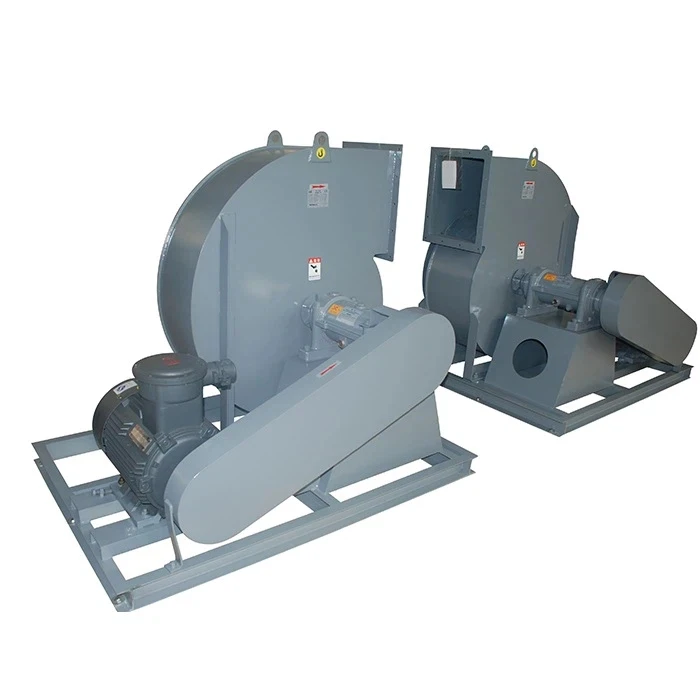
The air - flow rate you need for a draught fan depends on several factors. These include the size of the space, the purpose of the ventilation, the number of air changes per hour required, and any special requirements of the environment.
Step 1: Determine the Volume of the Space
The first step in calculating the air - flow rate is to figure out the volume of the space. If it's a rectangular room, you can use the formula: Volume (V) = Length (L) × Width (W) × Height (H).
For example, if you have a room that's 10 feet long, 8 feet wide, and 9 feet high, the volume would be V = 10 × 8 × 9 = 720 cubic feet.
If the space has an irregular shape, you might need to break it down into smaller, regular - shaped sections, calculate the volume of each section, and then add them together.
Step 2: Decide on the Number of Air Changes per Hour
The number of air changes per hour (ACH) is the number of times the entire volume of air in a space is replaced within an hour. The ACH you need depends on the use of the space.
- Residential spaces: For normal living areas like bedrooms and living rooms, an ACH of 0.5 - 1 is usually sufficient. This helps to keep the air fresh and remove any odors or pollutants.
- Commercial kitchens: In a commercial kitchen, where there are lots of cooking fumes and heat, you might need an ACH of 15 - 20. This ensures that the air is constantly being replaced to maintain a safe and comfortable working environment.
- Industrial facilities: Industrial spaces can have very different requirements. For example, in a paint - spraying area, you might need an ACH of 6 - 10 to remove the harmful fumes. In a warehouse with stored goods, an ACH of 1 - 3 could be enough.
Let's say you have a small office space with an ACH requirement of 2. Using the room volume we calculated earlier (720 cubic feet), we can move on to the next step.
Step 3: Calculate the Required Air - Flow Rate
Once you have the volume of the space and the ACH, you can calculate the required air - flow rate. The formula is: Air - flow rate (Q) = Volume (V) × Air changes per hour (ACH).
Using our example, Q = 720 × 2 = 1440 cubic feet per minute.
If you prefer to work in cubic meters per hour, you'll need to convert the volume and the air - flow rate accordingly. 1 cubic foot is approximately 0.0283 cubic meters, and 1 hour has 60 minutes.
Special Considerations
- Leakage: In real - world scenarios, there will always be some air leakage in a building. You might need to add a certain percentage (usually 10 - 20%) to the calculated air - flow rate to account for this. So, if our calculated air - flow rate is 1440 CFM, and we add a 15% allowance for leakage, the new air - flow rate would be Q = 1440 × (1 + 0.15)= 1656 CFM.
- Temperature and humidity: If the space has specific temperature and humidity requirements, you might need to adjust the air - flow rate. For example, in a hot and humid environment, you might need a higher air - flow rate to remove the moisture and cool the space.
Our Product Range
At our draught fan supply business, we have a wide range of fans to meet different air - flow rate requirements. For instance, our Coal Fired Boiler Blower is designed for power stations and boilers. It can provide a high - volume air - flow to ensure efficient combustion.
If you're looking for a powerful industrial solution, our Monster Industrial Centrifugal Blower |blower Industrial Fan is a great option. It's built to handle large - scale ventilation needs in industrial facilities.
And for applications like hot air ovens and industrial boilers, our Y5 - 48 Stainless Steel Hot Air Oven Industrial Boiler Suction Blower Exhaust Fan offers reliable performance with the right air - flow rate.
Wrapping Up
Calculating the air - flow rate for a draught fan in a given space might seem complicated at first, but by following these steps and considering the special factors, you can get an accurate estimate. And once you know the required air - flow rate, you can choose the right draught fan for your needs.
If you're in the market for a draught fan and need help with the calculations or product selection, don't hesitate to reach out. We're here to assist you in finding the perfect solution for your ventilation requirements. Contact us to start the procurement process and let's get your space well - ventilated!